


Mobile apps are a great way to build a simple business that supports your lifestyle. With the right idea and a little bit of upfront work, you can create a basic mobile app that solves a real problem for your users while providing you with recurring revenue.
There are several reasons why I love mobile app businesses:
1. The mobile app market is huge.
There were 149 billion app downloads in 2025. That’s 284,000 apps downloaded per minute.1
Users spend an average of 3.6 hours per day on mobile apps. That’s 13 minutes out of every hour—almost 25% of the day.2
2. Mobile app revenue is soaring.
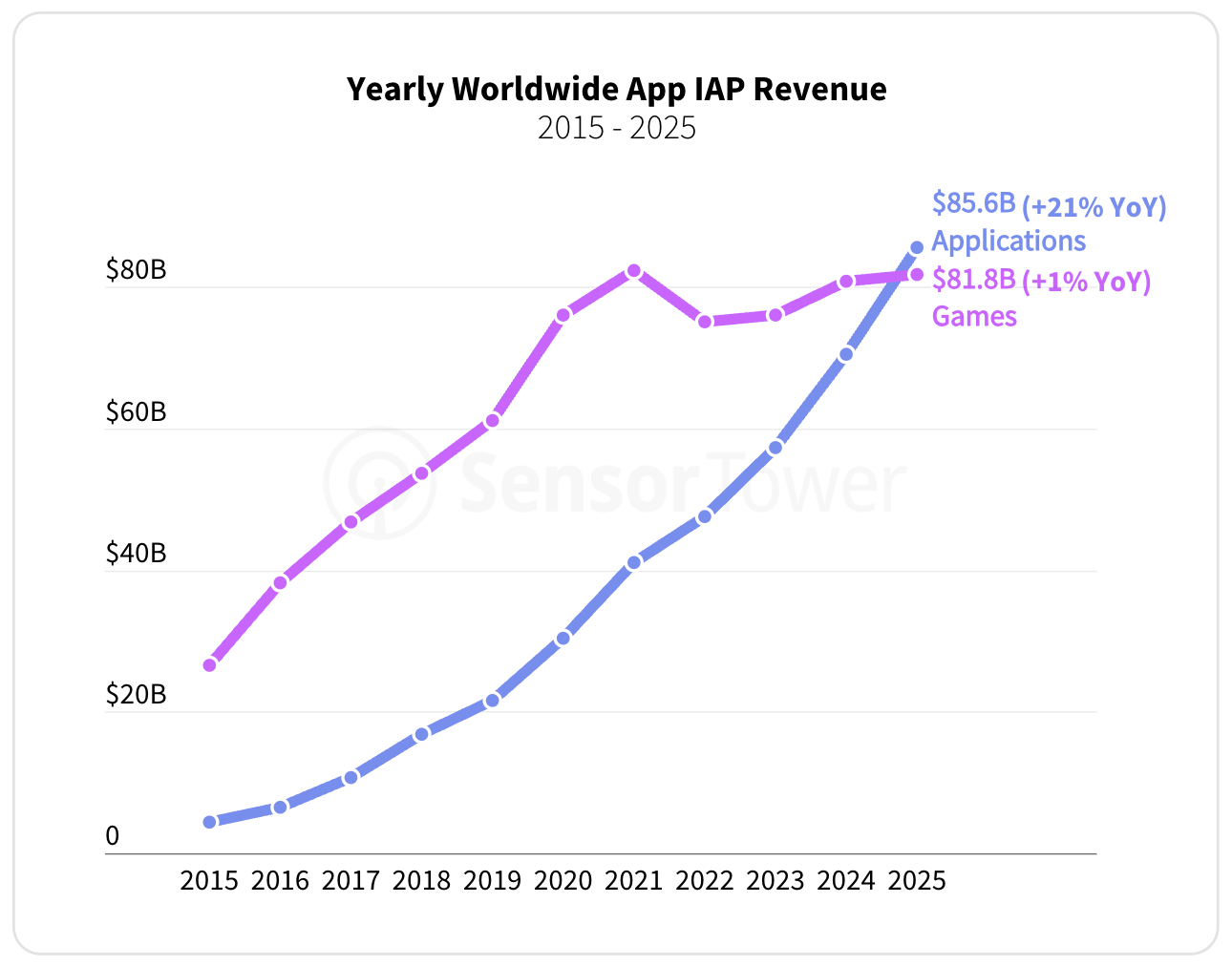
IAP revenue grew more than 10% in 2025, reaching $167 biliion. That’s $318,000 spent per minute in 2025.3
Consumers spent more in mobile apps than in mobile games for the first time ever in 2025.4
3. It’s never been easier to make a mobile app.
The barrier to entry has vanished. You no longer need to be a professional developer or have a computer science degree to build a functional app. Between AI-powered coding assistants and intuitive drag-and-drop interfaces, the technical gatekeeping of the past is gone.
No-code and low-code tools are more powerful than ever. Platforms like FlutterFlow or Glide allow you to build and launch an MVP (minimum viable product) in a fraction of the time it used to take. These tools handle the complex backend infrastructure, letting you focus entirely on solving the user’s problem and generating revenue.
On top of that, smartphone usage is only expected to keep growing,5 so mobile app usage will continue to grow, too. And the mobile app stores are a huge traffic source that only mobile apps can tap into.
Intrigued by this opportunity? Keep reading to find out if a mobile app business is a good fit for you and exactly how to get started.
How to Come Up With a Profitable App Idea
If you’ve made it this far, you must be at least a little bit interested in creating a mobile app business. Now you need an idea! The rest of this article will walk you through my step-by-step process for developing profitable app ideas.
Even if you already have an idea, I recommend reading on to validate it and ensure it has a good chance of success before you start.
The rest of the article is broken down into five parts:
Brainstorming Mobile App Ideas
What Good Opportunities Look Like
Identifying Demand for Your Idea
Validating Your App Idea
Bonus: Tips for Lifestyle Businesses
1. Brainstorming Mobile App Ideas
Unless you already have a mobile app idea, the first step to a mobile app business is to start brainstorming. As you’re going through this process, jot down anything you think of and don’t worry about if it’s a good idea or not. You don’t want to stifle your creativity, and there will be plenty of time to choose the best idea later. Plus, sometimes a bad idea can lead to a good one.
There are lots of different ways to stimulate ideas:
Think about the apps you use.
Look at the top apps in different categories.
Think about what communities you’re a part of.
Think about your daily routines at home and at work.
Look for product ideas outside of the app store, eg. on Product Hunt or Reddit.
Look at general trends in the world or in specific industries.
Keep reading for examples of how each tactic can be used to develop an app idea.
Think about the apps you use.
I have a Level app on my phone that I use when I want to hang something. As someone who isn’t very handy but tries to do basic home tasks myself, it would be nice to have an app that guides me through them.
🔎 Insight: People who don’t own a physical level for hanging pictures often use an app that turns their phone into a level instead.
💡 App Idea: An info app that provides little playbooks that people without experience can follow to do basic handy tasks at home by themselves.
Look at the top apps in different categories.
When looking at the top Health & Fitness apps in the Google Play Store, I saw an app called BP Tracker that logs blood pressure over time. I thought about how I track my blood pressure in a spreadsheet, along with a few other health metrics. This gave me the idea to create an app that can track blood pressure alongside other important health metrics.
🔎 Insight: A blood pressure tracking app has a lot of downloads.
💡 App Idea: An app that expands functionality by tracking blood pressure alongside other important health metrics.
Think about what communities you’re a part of.
As a surfer, I spend a lot of time checking the buoy swell readings on the NOAA website. It would be nice to have an app where I could save my favorite buoys and check them more easily.
🔎 Insight: Surfers spend a lot of time checking buoy readings on the NOAA website.
💡 App Idea: A buoy app where you can save specific buoys to easily compare their readings with one click.
Think about your daily routines at home and at work.
I created a Google Doc to help me remember everything I planted on my balcony last summer, along with the care instructions. It would be nice if I could pull this together with a few clicks using an app instead.
🔎 Insight: It’s a lot of work to research the care needs of all your plants and remember what you planted.
💡 App Idea: An app that would mostly automate compiling care info and tracking what’s in your garden.
Look for product ideas outside the app store, like on Product Hunt or Reddit.
I recently came across SimplyFit on Product Hunt, which is positioned as a fitness mentor, and started thinking about other industries where an app-based mentor would be useful.
🔎 Insight: There’s a fitness app positioned as a digital mentor.
💡 App Idea: A digital mentor could be useful for other activities like specific sports, learning a new skill, or nutrition.
Look at general trends in the world or in specific industries.
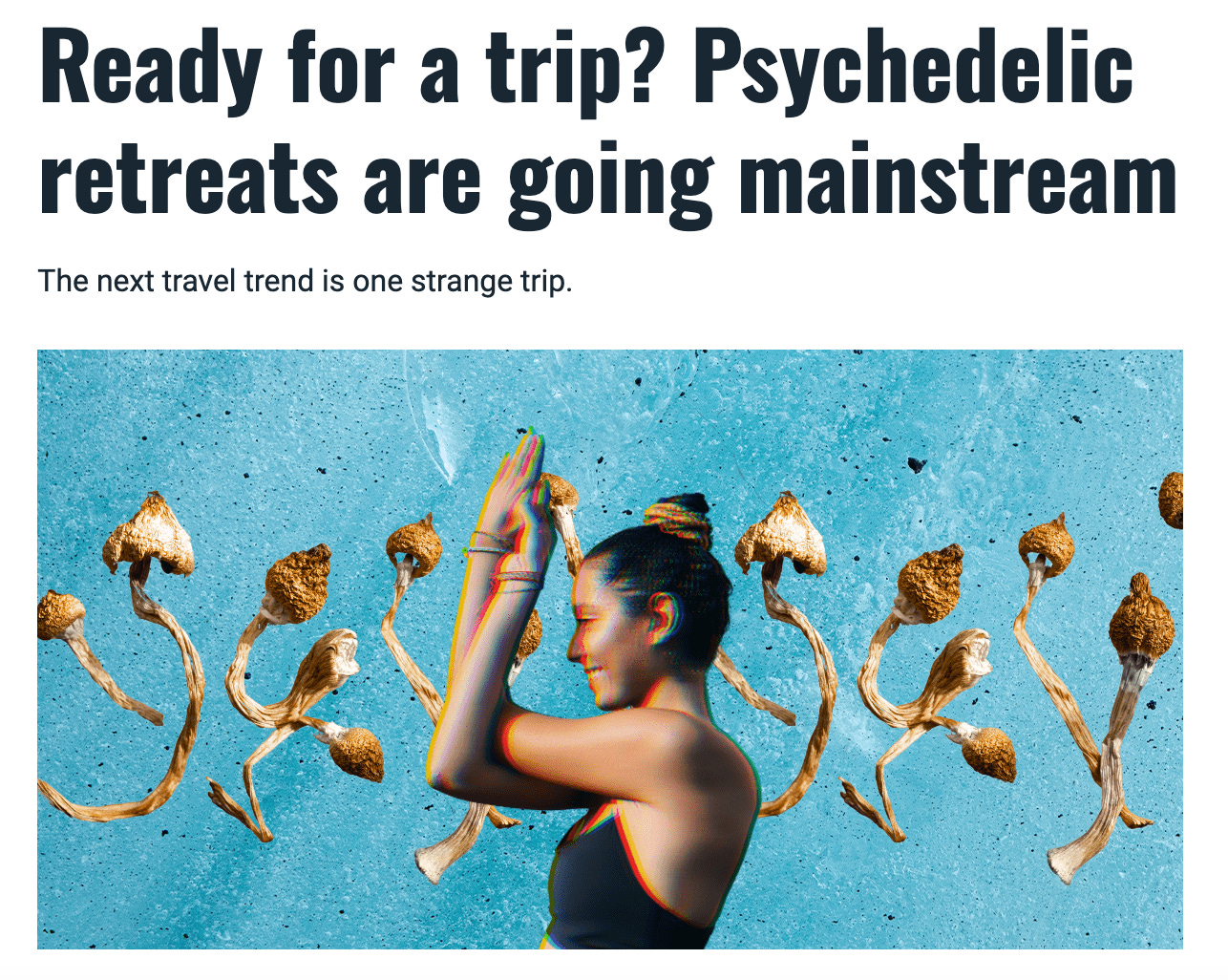
I recently saw on The Hustle that psychedelic retreats are going mainstream. This implies that the usage of psychedelics is growing, and people are looking for support in exploring them. Maybe there is an opportunity for a psychedelics mentor app (a digital shaman of sorts) to help people have safe and positive experiences exploring psychedelics.
🔎 Insight: Psychedelic usage is growing, and people want support exploring them
💡App Idea: A digital shaman app that provides information to guide new psychedelic users through safe and positive experiences.
2. What Good Opportunities Look Like
For your app to succeed, it needs to stand out. As you’re brainstorming, look for opportunities to do the following:
Solve an unsolved problem.
This is arguably the hardest option, but sometimes you might find an opportunity to solve a problem that hasn’t been solved yet. Someone always has to be first, and if you’re lucky, it might be you!
Improve on an existing solution.
There are lots of ways to enter competitive markets by improving on existing solutions:
Offer a better user interface.
Add missing features.
Simplify the experience by cutting back to only the features that matter.
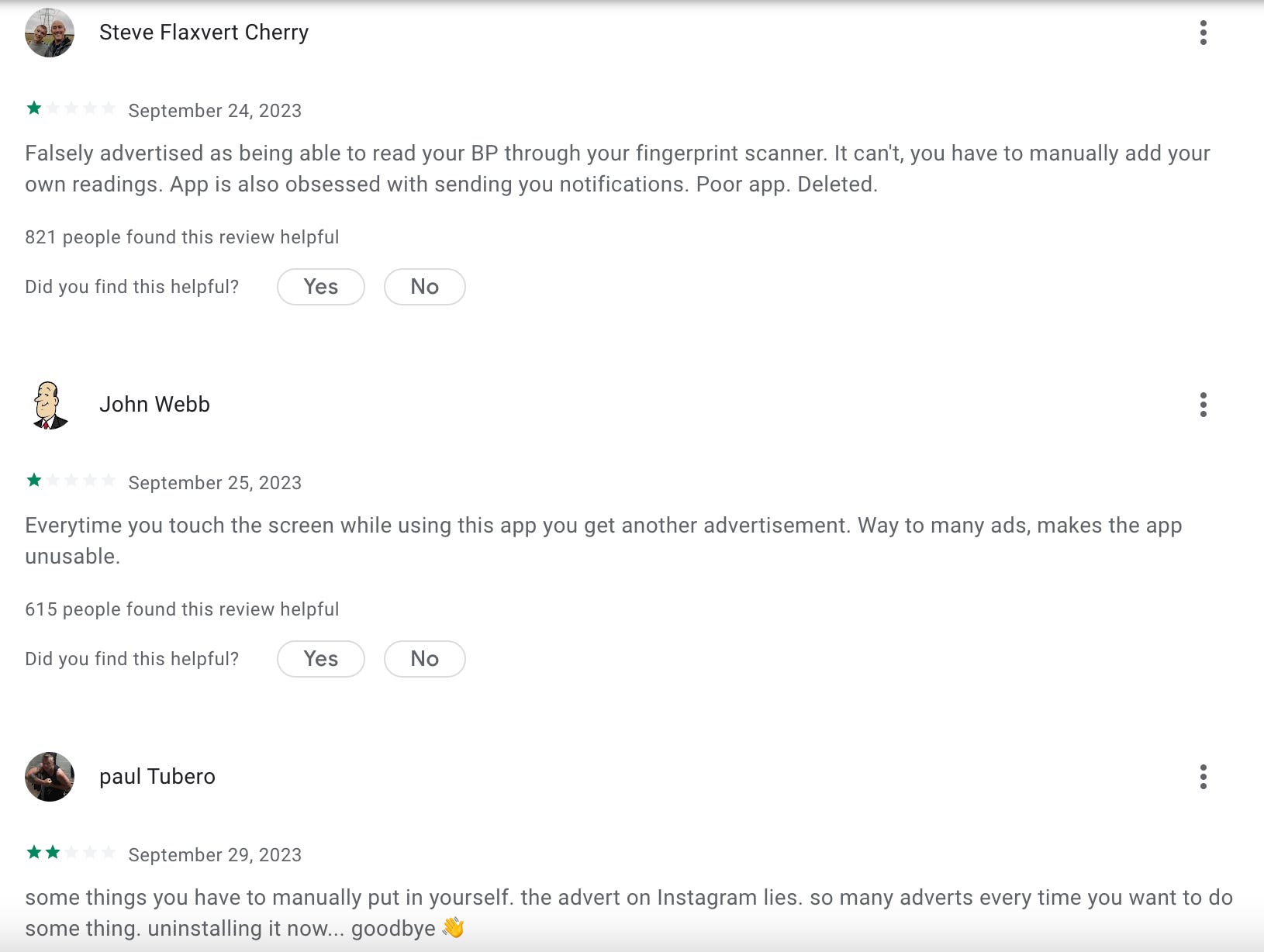
For example, I noticed many negative reviews of the BP Tracker app I found earlier. There’s clearly an opportunity to provide a better user experience. Using apps and reading reviews is a great way to find areas for improvement.
Niche down a broad solution.
Another way to improve on existing apps is to tailor them to a narrower audience that could be better served.
For example, I have a couple of meditation apps on my phone. As an athlete, I have frequently looked for meditations on dealing with injury or, in the case of surfing, fear. Unfortunately, I haven’t found much in these industry-leading apps, and I'd love to see an app that focuses on meditation and mindset for athletes in general, or surfers specifically.
Copy a solution from one industry to another.
Sometimes, rather than tailoring an app to a narrower audience, you can take an app idea from one industry and transplant it into another where it might not yet exist.
For example, coming from a background in marketing and business analysis, I’m very familiar with user testing to validate a hypothesis before moving forward. This got me thinking that maybe we should have user testing for dating profiles. People could user test their profiles (photos, text) and get anonymous feedback that will help them present themselves more attractively, or at least make sure they’re attracting the people they want to attract.
3. Confirming Demand for Your Idea
Once you have an app idea you’re excited about, it’s time to try to validate demand for your idea. You want to build confidence that enough people out there will want to use your app to make it a viable income stream.
Here are a few tactics for validating your idea:
Check app store searches.
Checking App Store search volume is the most direct way to see demand for your idea. If people are typing keywords related to your idea into the app stores, you know there are potential customers out there.
I use App Radar for app store keyword research.
Check other searches
Not everyone searches directly in the app store. We often start with a Google or YouTube search to try to find a solution. If you see strong searches elsewhere online, it’s a reassurance that people are out there looking for your idea, even if they haven’t searched the app store.
Amazon searches are also sometimes a useful indicator of demand, particularly if you’re digitizing a product that already exists in a tangible form. It’s good to see people are willing to spend money on a product related to what you’re doing. For example, maybe people aren’t searching for an app that provides dating profile feedback, but they are searching for books with advice on how to optimize their dating profile.
I use Ahrefs for keyword research on Google, YouTube, and Amazon.
Look for strong competitors.
Even if you don’t see a lot of searches related to your idea, you can feel good about the potential demand for your app if there are strong competitors. Look for similar apps with a lot of users and, ideally, solid revenue, too.
I use Sensor Tower to estimate revenue.
Find your audience.
Not every good idea will have strong demand visible in the form of searches or strong competitors. Especially nascent app ideas that may not yet exist. In this case you want to try and validate your idea a different way. Look for online communities where your potential users spend time so you can confirm their interest and be sure you know how to find them online.
For example, maybe you’re in a Facebook group where a lot of people complain about the problem you want to solve. You at least know your audience is out there and how to start reaching them, even if they aren’t searching the app store.
4. Validating Your App Idea
Once you are confident that there are people who might want your app, you can move on to validating your solution.
Collect user feedback.
Collecting user feedback before you create your app will help ensure you’re developing a solution people actually want to use. There are many ways to do this.
Surveys: You can survey the audience you want to reach to gather a lot of input quickly.
Interviews: You can interview potential users directly to get more granular insights.
Digital prototypes: You can show potential users digital prototypes, which could be as simple as mockups of how the app would look, to get their feedback on the user experience before you start to build it.
Start with a minimum viable product (MVP).
It’s important to adequately scope the first version of your app. You want to create the minimum viable product: a good-enough solution that people can use without being overly complex. You want to minimize the time and money you spend on your app until you have real-world users to confirm you’re on the right track. You can continue to add features and content as you go.
5. Bonus: Tips for Lifestyle Businesses
My focus is on sustainable businesses that support a lifestyle, not on startups seeking hockey-stick growth at any cost. If you’re looking for a mobile app idea to create a solid income stream, keep these tips in mind.
Avoid social networks and marketplaces because they’re too complex.
Mobile app businesses like Uber (marketplace) and Instagram (social network) are extremely difficult to get off the ground. For every business that finds success, many more will fail along the way—typically after heavy investment. These are not good options for lifestyle businesses.
Look for something people will use regularly.
You’ll likely be monetizing your app through in-app purchases (including subscriptions) or ad revenue. Both of these require people to keep using your app for you to keep making money.
If you’re selling a one-time purchase, single-use apps can work as long as you know you’ll have a continuous stream of new users. For example, GuideAlong apps are usually single-purchase and single-use, but they continue to make money because new tourists keep visiting the destinations they support every day.
If a mobile app business is something you’re interested in, start brainstorming your first idea right now. There’s no way you won’t find a good idea if you follow my process. Plus, you’ll learn a lot about the mobile app industry while you’re at it!
Or if you’re really stuck, check out some mobile app ideas I developed using this process!
To endless possibilities,
Casandra