


A branded Substack publication is a real commitment. To be successful, you need a clear editorial mandate, a voice that is genuinely aligned with the brand, and enough resources to publish consistently. Most brands that launch one underestimate at least one of those three things, which is why so many of them stall within the first year.
For brands that are not ready to build that infrastructure, or that want to create some presence on Substack before fully committing, there is an easier entry point: the founder or executive who already has something to say.
This is the Substack backdoor. Instead of standing up a complete editorial operation, the brand gets a foothold on the platform through a person who already has credibility, a point of view, and a reason to write. The publication lives under their own name, not the brand’s. The brand shows up organically, and the audience that builds around that person transfers trust back to the company in a way that no content calendar can manufacture.
Why Thought Leadership Over a Branded Publication?
Some branded publications work well. These tend to have a few things in common:
They publish on a consistent schedule.
They have a defined editorial focus that is specific enough to attract and hold an audience.
They have someone accountable for the quality of every issue.

Many brands are not in a position to satisfy all these requirements or may want to establish a presence on the platform while they figure out the larger editorial question. In these cases, the thought leadership path removes most of these obstacles.
The Benefits of Thought Leadership Publications
When an executive publishes under their own name, the brand gains three things that a content team cannot produce on its own behalf.
1. Clear ownership, which leads to consistent publishing.
A thought leadership publication has one owner: the person whose name is on it. That single point of accountability is what keeps it alive. Brand publications often stall because ownership is distributed across a team, an approval chain, or a rotating cast of contributors, and when everyone is responsible, no one is.
2. A new audience that did not already know the brand
Katie Sturino may be the founder of Megababe Beauty, but her Substack, Lobby Coffee, is not Megababe. When publications live under the executive’s name rather than the company’s, readers subscribe to the person first, and the brand benefits from that relationship without having to earn it from scratch.
3. Product mentions that read as personal recommendations.
Crown Affair’s hair products frequently show up in packing lists and haircare tips on Dianna Cohen’s Substack, Take Your Time, but they do so alongside other products she recommends. When a trusted person mentions a product in passing, it lands differently than when a brand mentions its own product. The inbox is the highest-trust real estate a brand can occupy, and a founder writing personally earns that trust in a way a brand publication rarely does.
3 Brand Executives Building a Real Audience on Substack
I’ve tracked 11 thought leadership publications connected to brands on Substack since the start of 2026. The publications in this dataset with the most consistent cadences are all founder-led, although the specific approaches vary considerably. Some executives write directly about their product category, others treat the publication as a personal outlet where the brand appears only incidentally. Let’s take a look at three different successful approaches.
1. Jones Road: Bobbi Brown by Founder Bobbi Brown
Bobbi Brown publishes under her own name, not the Jones Road Beauty brand. The publication runs biweekly, has 15K subscribers, and carries a paid tier with thousands of paid subscribers. She regularly shares Jones Road content with her subscribers, giving the brand a direct line to an audience that already trusts her judgment.

The publication has bestseller status and earns revenue independently of anything Jones Road does. That changes the strategic calculus: this is not brand support. It’s a business inside the business, one that also happens to be the most credible beauty endorsement channel the brand has access to.
2. The Only Jane: Jane on Jeans by Founder Jane Herman
Jane Herman spent 20 years in editorial before launching a denim brand. That background shows in Jane on Jeans, a weekly publication that covers exactly one thing and covers it with the kind of authority that only comes from someone who has spent a career thinking about it. Jane on Jeans has 11K subscribers and reached bestseller status with a paid tier. Traffic grew from 6,100 visits in January to 11,300 in March 2026, a trajectory that suggests the audience is still expanding.
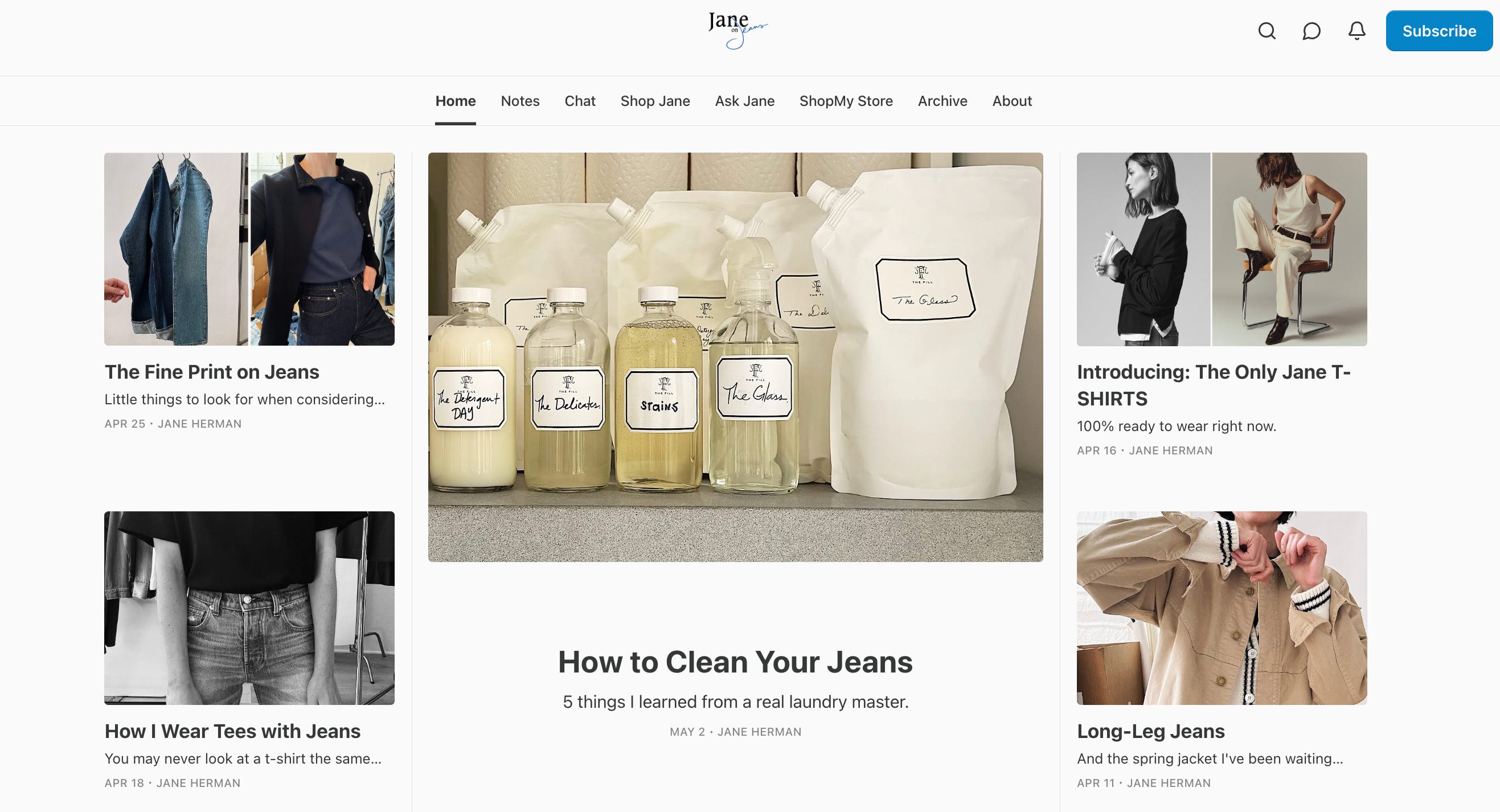
What makes Jane on Jeans different from most founder publications is that its editorial focus and product category are the same. She is not writing about her life with jeans in the background. Jeans are the subject. Readers subscribe because she knows more about denim than anyone else they follow, and that credibility is what the brand runs on.
3. Ghia: Night Shade by Founder Melanie Masarin
Night Shade is Melanie Masarin’s Substack. It has almost nothing to do with non-alcoholic beverages. The posts cover fashion, food, New York life, travel, and personal essays. But Ghia appears often in passing and as part of explicit calls to action.
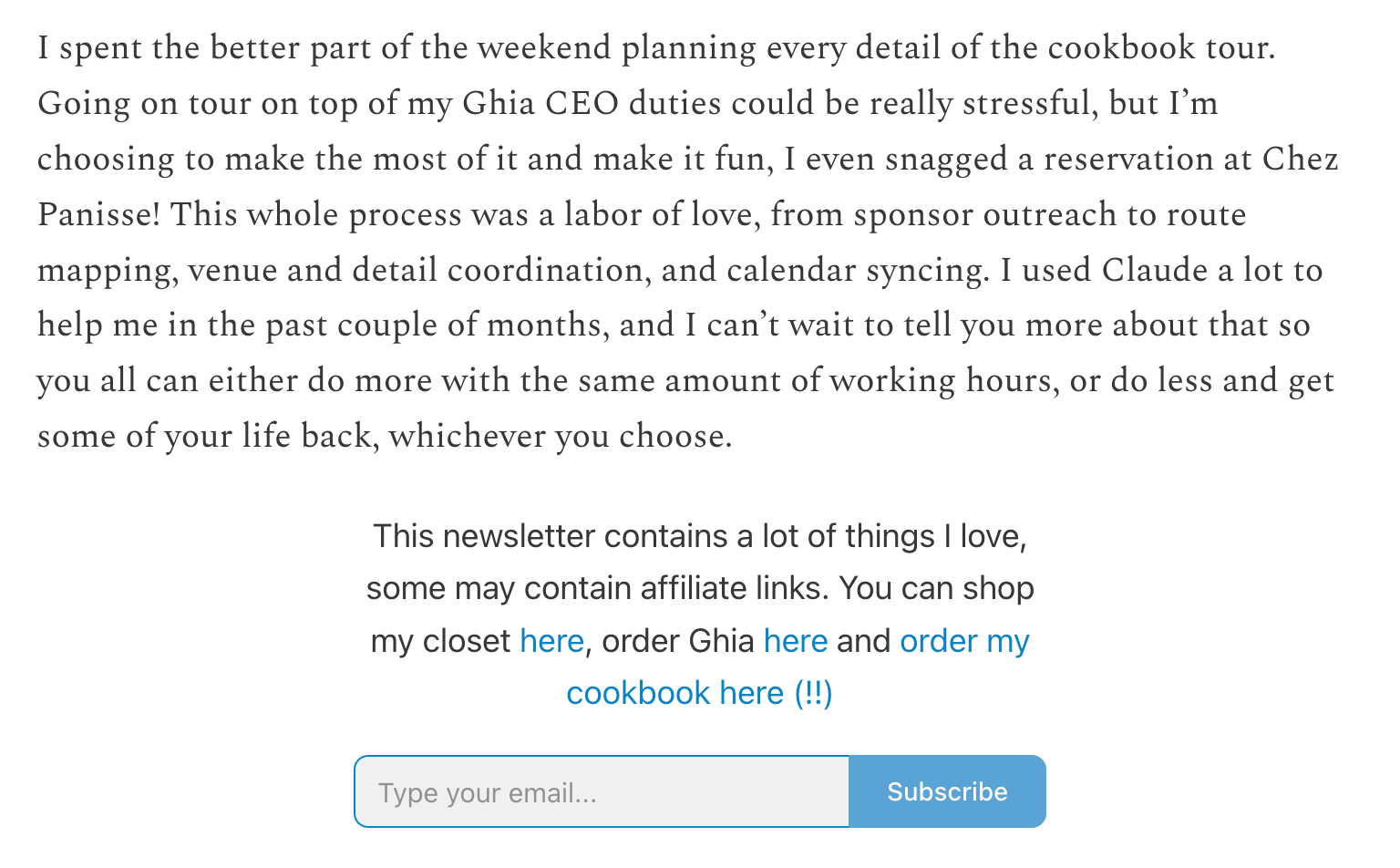
The publication has 13,000 subscribers, bestseller status, a paid tier, and Q1 2026 traffic that grew from 7,600 visits in January to 16,400 in March. That is the strongest growth trajectory among all thought leadership publications in this dataset over the same period. Melanie's readers trust her taste, and Ghia is part of that taste. When it shows up in the newsletter, it lands the way a friend's recommendation does, rather than feeling like an ad.
Should Your Brand Create a Thought Leadership Publication?
Not every executive is equipped to do this. Those who are successful already have a point of view they express in other contexts and are willing to attach their names to an opinion. Executives who want the audience without the writing are not a fit: A ghostwritten founder publication usually reads like one, and not in a good way.
Jane Herman spent 20 years in editorial before launching a brand. Bobbi Brown’s credibility in beauty is decades in the making. You can’t shortcut either of those.
What you can do is identify the executive in your organization who already has something to say and give them a reason to say it consistently. And with the right executive, like those listed above, a thought leader publication is a high-value distribution channel that a content team simply cannot build on the brand’s behalf.
Q1 2026 Substack Brand Report
The full Q1 2026 Substack Brand Report covers all 33 publications I tracked, with traffic data, subscriber counts, publishing patterns, and authorship models for each. If you want the complete picture, you can access it here.
To endless possibilities,
Casandra
PS. Know about any brands on Substack that I missed? I’d love to check them out, too! Leave a comment or DM me!
Looking to bring your brand to Substack?
Whether you’re still deciding or ready to build, I’ll meet you where you are.
I offer executive briefings and hands-on strategy sessions for marketing teams that want to win on Substack.
Honored 🥹 thank you! 💘