


Did you know you can send personalized emails to specific subscriber segments without publishing a new post?
Yup, that’s right. Many people don’t realize that you can draft and send an email to any segment of your subscribers at any time using Substack.
Emailing individual segments is crucial for building a relationship with your audience because it enables you to tailor your communications. Instead of only emailing one thing to everyone, you can contact different parts of your list for different reasons.
Tailored email will also help you maximize publication growth. Email marketing is the most important digital channel for any business because it’s the only channel where you’re not at the whim of an algorithm. It’s even more important for a newsletter business!
Substack recently made segments much more powerful, too. You used to have to rebuild your filters from scratch every time you wanted to email the same group, but now you can save a segment once and reuse it whenever you want.
How to Build a New Segment In Substack
Segments live in their own tab on the Audience page of your publication dashboard. A segment is a saved set of filters, built from criteria like paid status, activity level, signup date, or subscriber tags.
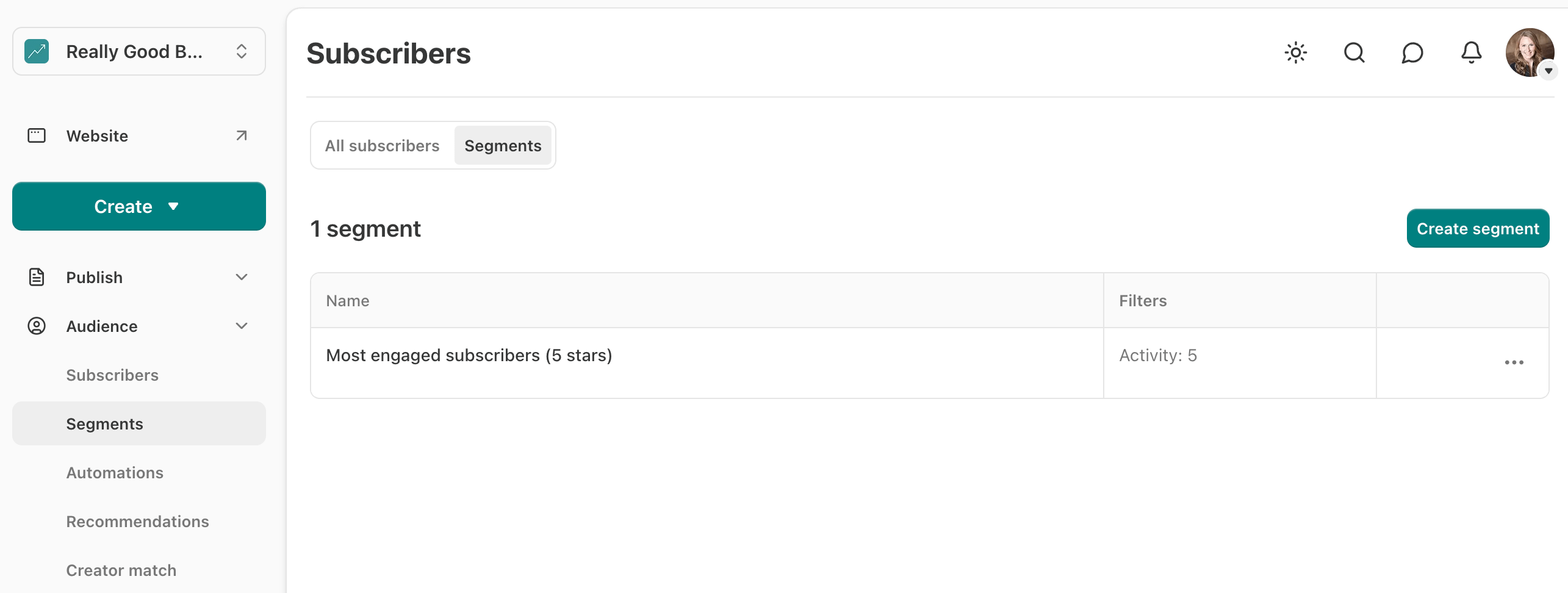
From the Segments tab, you can start with one of Substack’s templates, such as longtime free subscribers, or click “Start from scratch” to build your own.
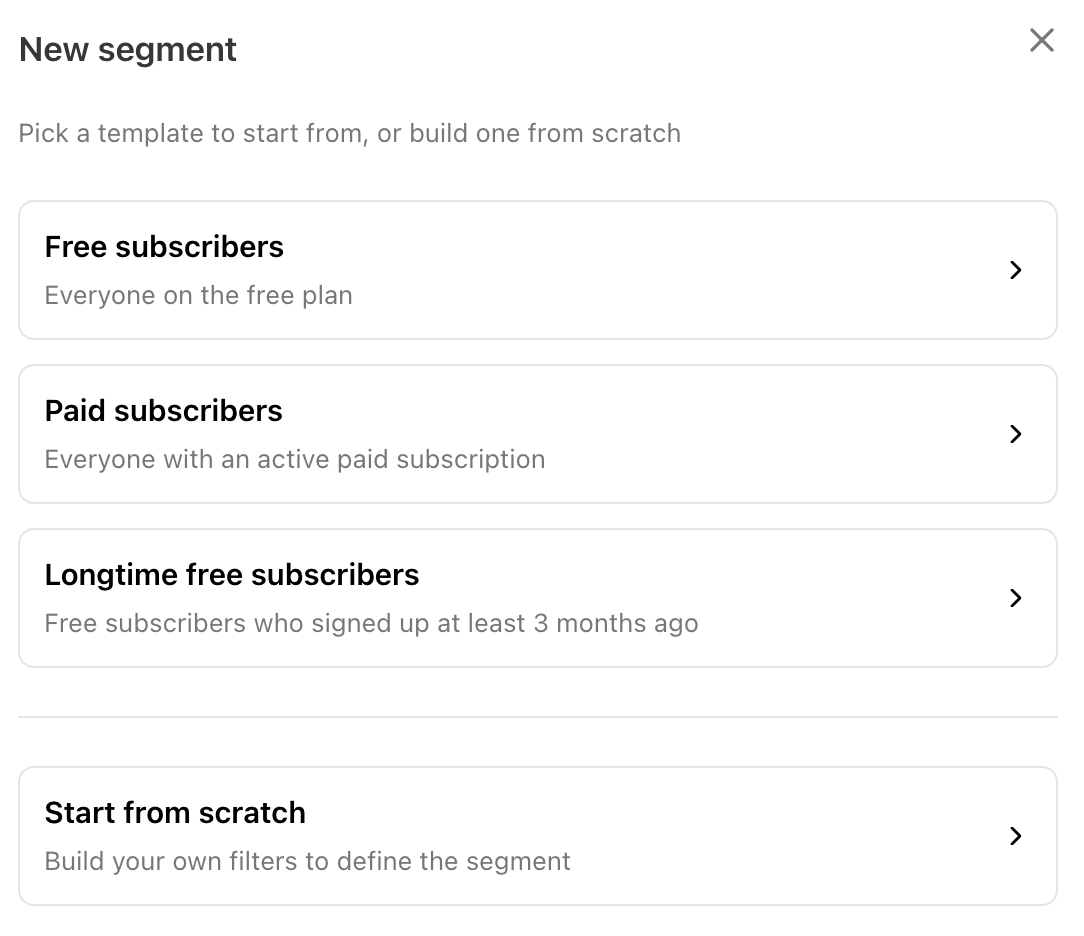
Substack offers more than 45 different filters, and filters can be combined to build even more specific segments. Remember to scroll down to see all the options!
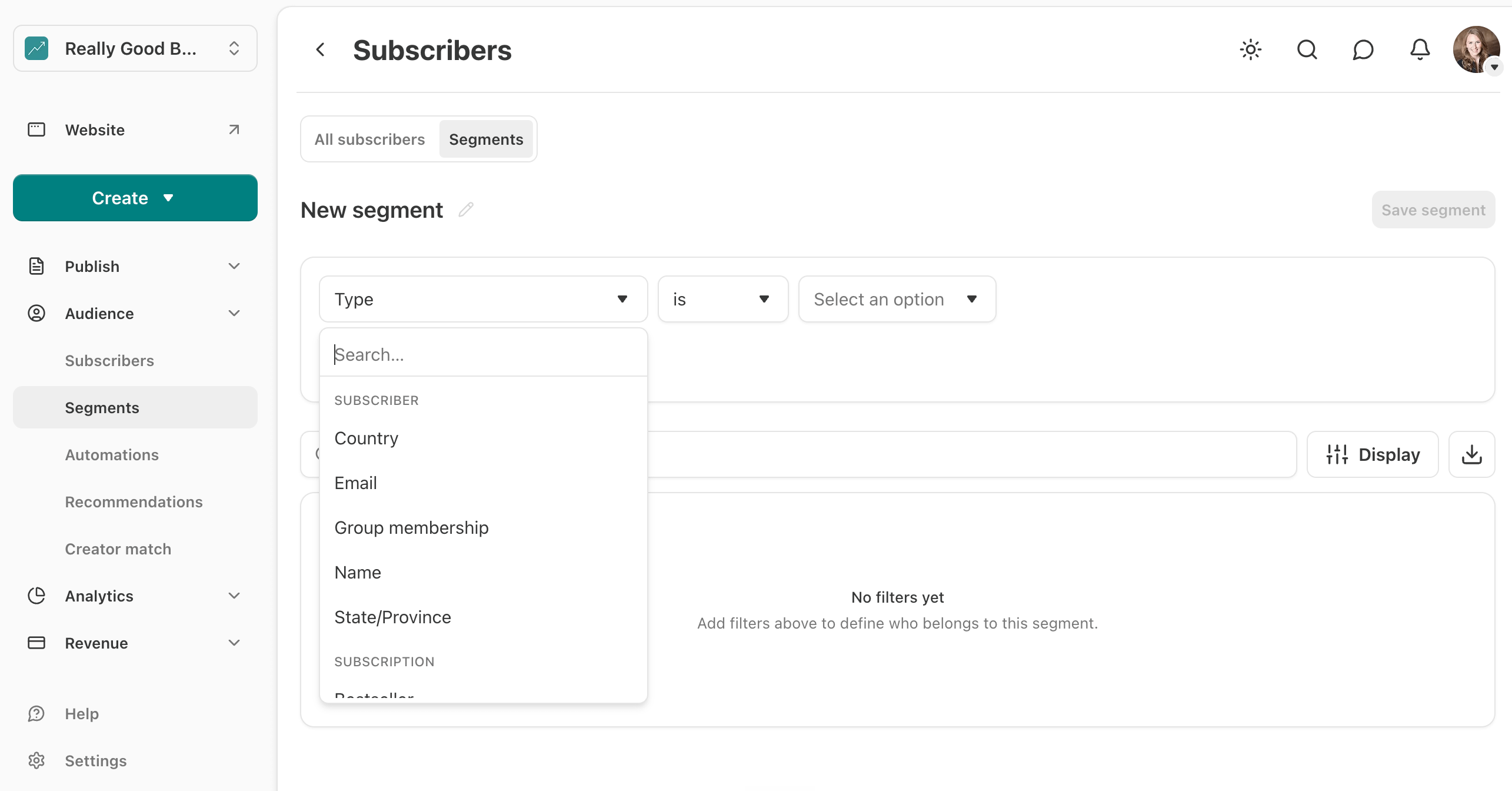
Each filter has its own settings. For the Subscription type filter, you can choose a modifier and a plan type.

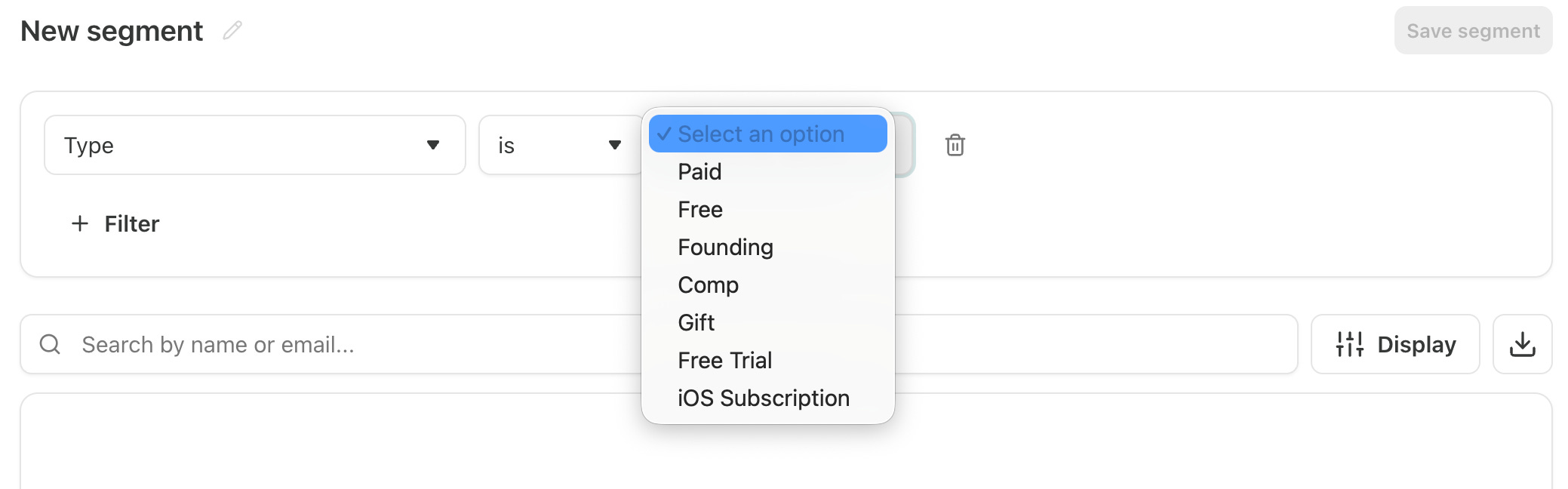
Here are the filter settings to see only your subscribers currently in a free trial.
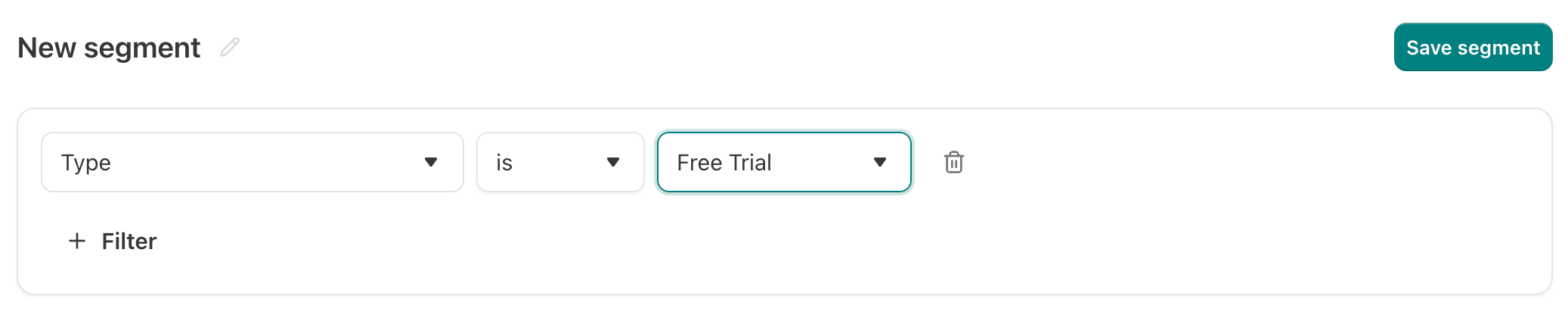
Once your filters are set, click Save segment and name it. Congratulations, you’ve created your first segment!
Saved segments update themselves automatically. For example, if you build a segment of paid subscribers, anyone who upgrades next week joins the segment without you needing to do anything, and anyone who cancels drops out.
You can also change a segment later. Click on a segment to open it, adjust the filters, rename it, and click Save segment to lock in your changes.
There are so many ways to segment your audience. For example, if your publication has multiple sections, you could filter your subscribers by section and again by activity to save a segment of your most engaged subscribers around a specific topic.

How to Email a Segment in Substack
Once you’ve saved your segment, it’s time to email them. Open the segment from the Segments tab, and click the checkbox next to Subscriber at the top of the list.
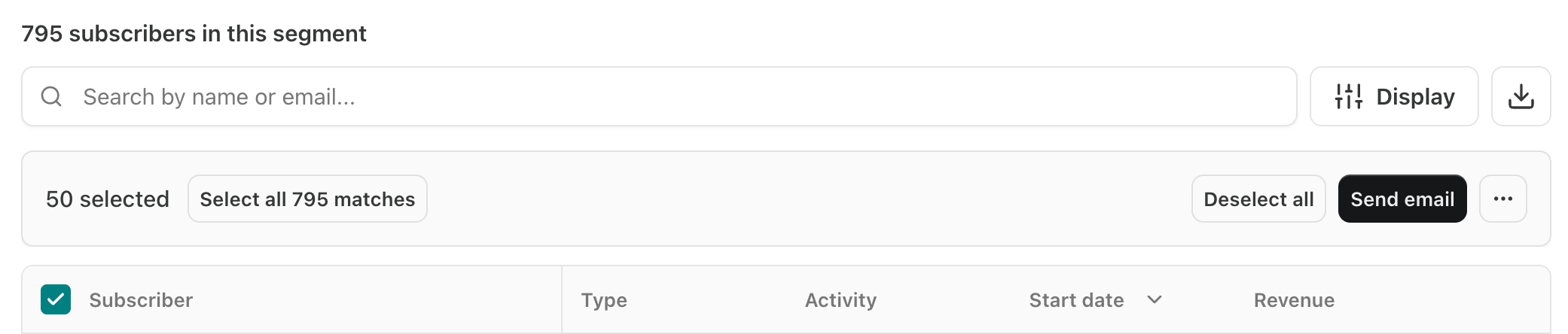
This will only select all the subscribers on the first page, so if your segment has more than 50 subscribers, click the Select all X link that pops up to capture the entire segment.

Once you’ve done that, it’s time to draft your email. Click the email button on the right to open up the editor.
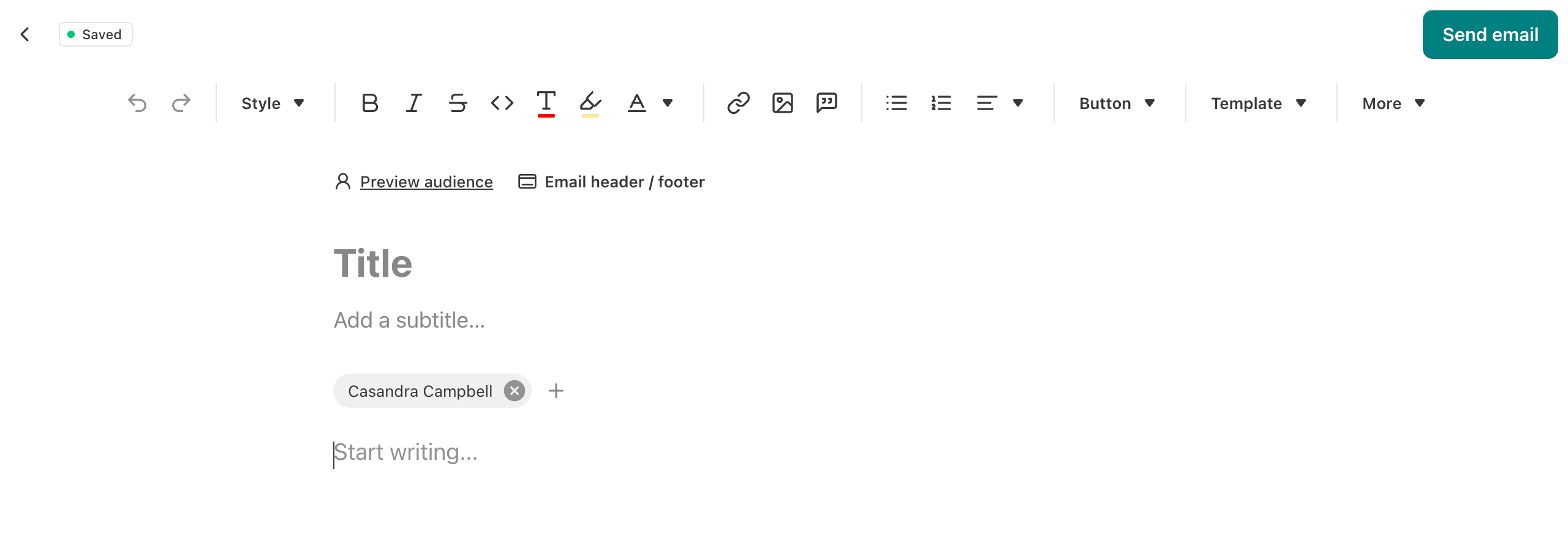
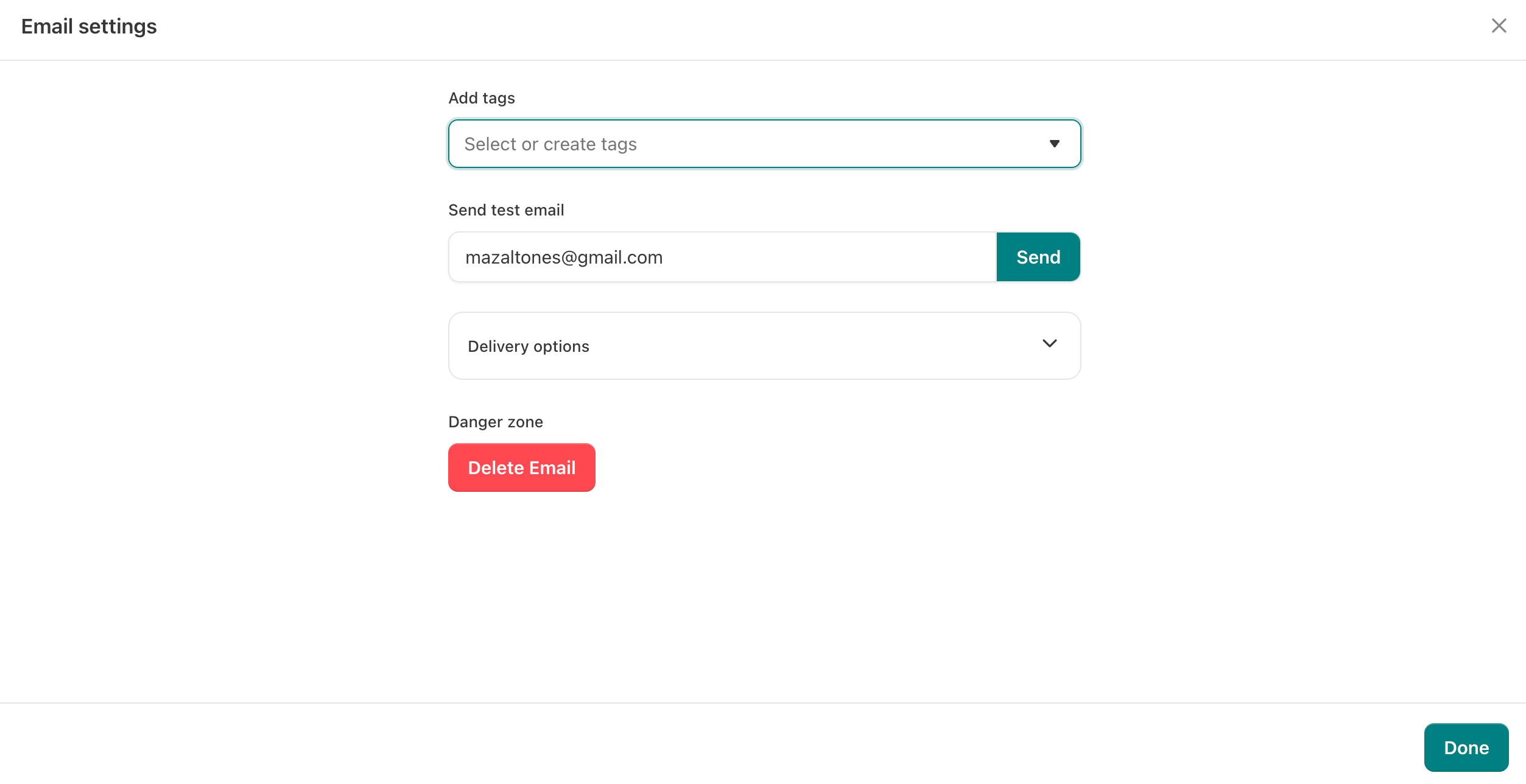
You’ll likely notice that it looks similar to the post editor but has fewer settings. One setting you can still use is tags. While your emails will not be displayed on your publication, tags can still help organize emails so you can find them later. Tags will be especially useful for reusing email content in the future.
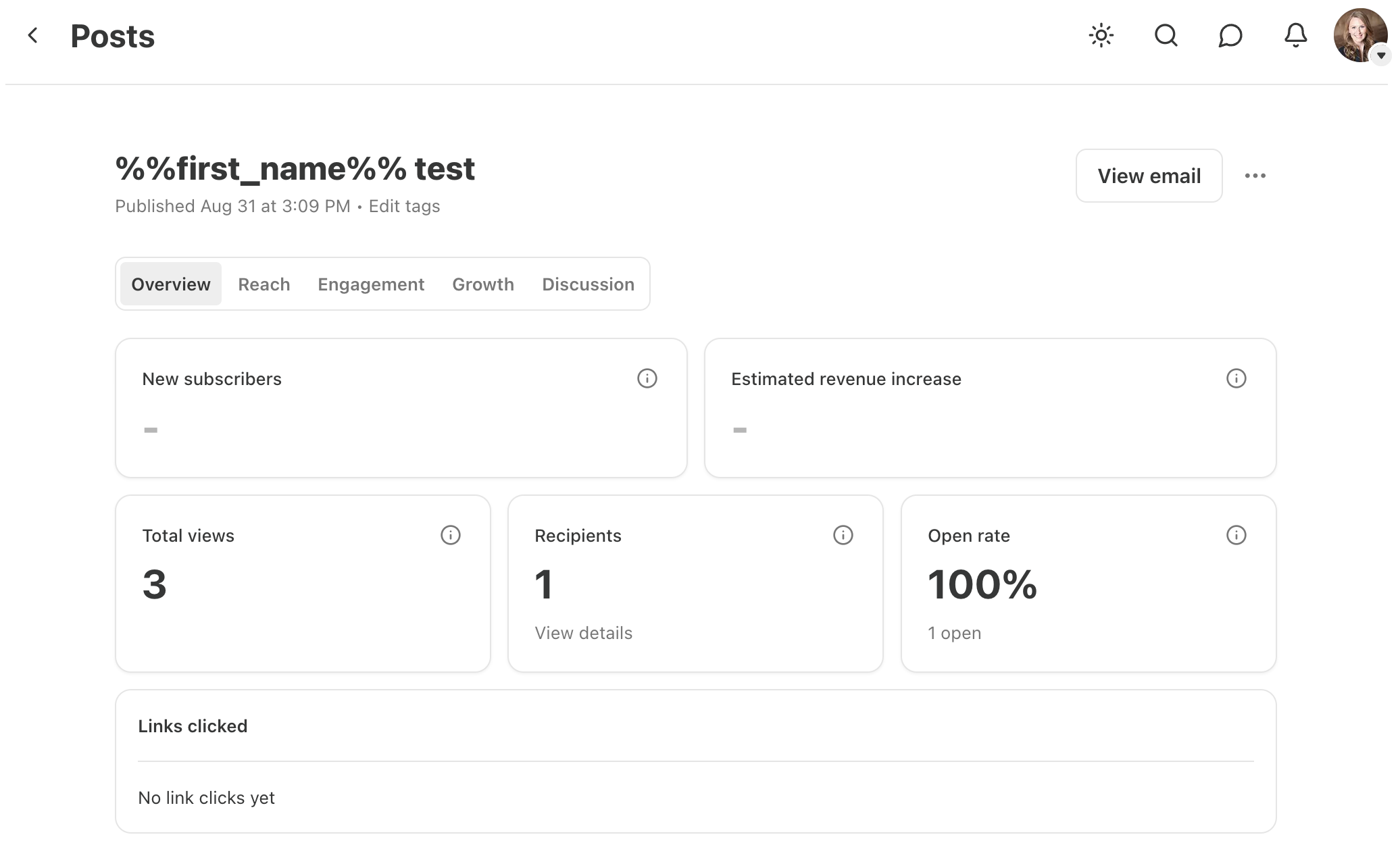
Once you’ve written and sent your email, you’ll see it (and its stats) in the Published tab of your posts dashboard.

How to Send a Post to a Segment on Substack
Saved segments also work with regular posts, so you can publish an article and email it to only part of your list. When you’re ready to publish, click Continue and expand the Advanced settings at the bottom of the page, check Only send to a specific audience segment, and choose your segment from the dropdown.
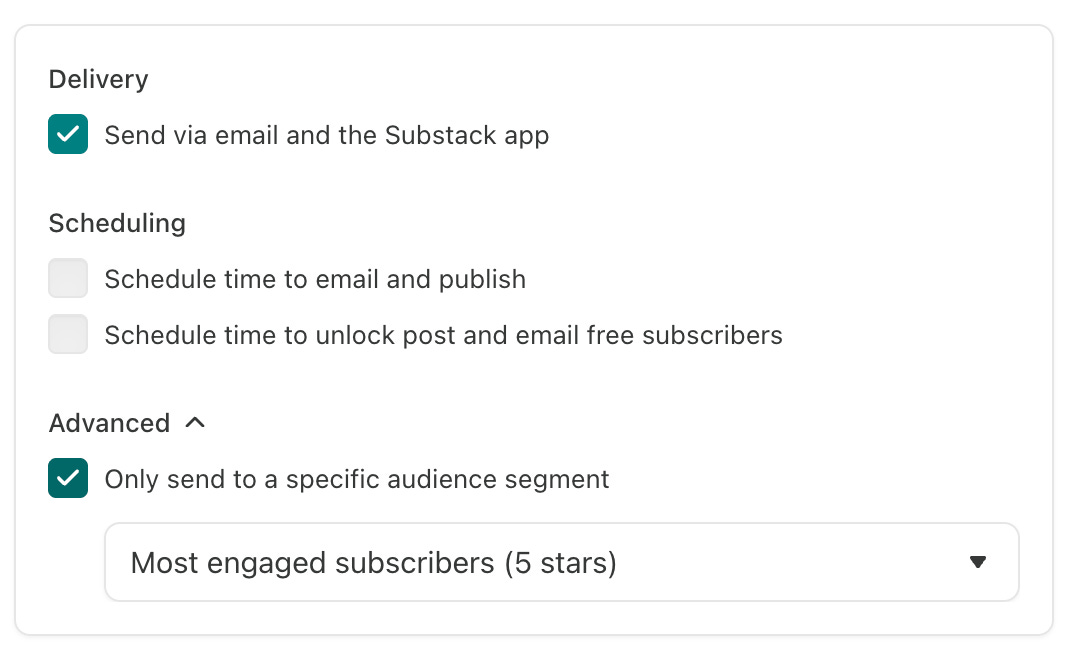
A post sent to a segment is still published publicly on your website and in the Substack app. Only the email and push notification are limited to the segment you choose, so segment sending makes a post targeted, not private.
What Is the Difference Between Segments and Sections on Substack?
Segments and sections both narrow down who receives an email, but the control sits in different hands. A segment is a filtered slice of your audience that you define based on subscriber data like paid status, activity, or signup date. A Substack section is a content stream within your publication that readers can opt in or out of themselves.

A section is the right tool when you regularly publish a specific type of content that only some readers want, like a podcast or a weekly link roundup, because it lets each reader manage their own inbox. A segment is the right tool when you want to send a targeted message based on what you know about your subscribers, like a win-back email to readers who stopped opening or an upgrade pitch to your most engaged free subscribers.
Congratulations! You’ve expanded your skills from being just a newsletter publisher to an email marketer, too.
Next, check out four Substack segments you should email, along with how to find them.
To endless possibilities,
Casandra
Need More Help?
Really Good Business Ideas Premium: A membership designed to make starting and growing a profitable business easier. Full archive access, DM support, and a library of tools and resources.
Substack Creator OS: A complete operating system for planning, writing, growing, and monetizing your newsletter, all in one connected Notion workspace. (Right now, it’s free for Premium subscribers).
Work With Me Directly: Book a 1-on-1 consultation or coaching call to get personalized help when you need it. Think of it as a focused working session to get unstuck, gain clarity, or move something forward.
Build Your Brand on Substack: Whether you’re still deciding or ready to build, I’ll meet you where you are. I offer executive briefings and hands-on strategy sessions for marketing teams that want to win on Substack.

As someone super fresh to the Substack scene I truly appreciates posts like this. Many thanks!
As a business prof, this is a really good business idea! Looking forward to next week as I seek to expand my personal finance class to a wider audience.