


There’s a place I love to stay in Upstate New York called Spruceton Inn. It’s not fancy, but it’s lovely and full of character. When I recommend it to friends, I describe it as “like camping but with a bed, heat, and running water” (which, if you ask me, is ideal).
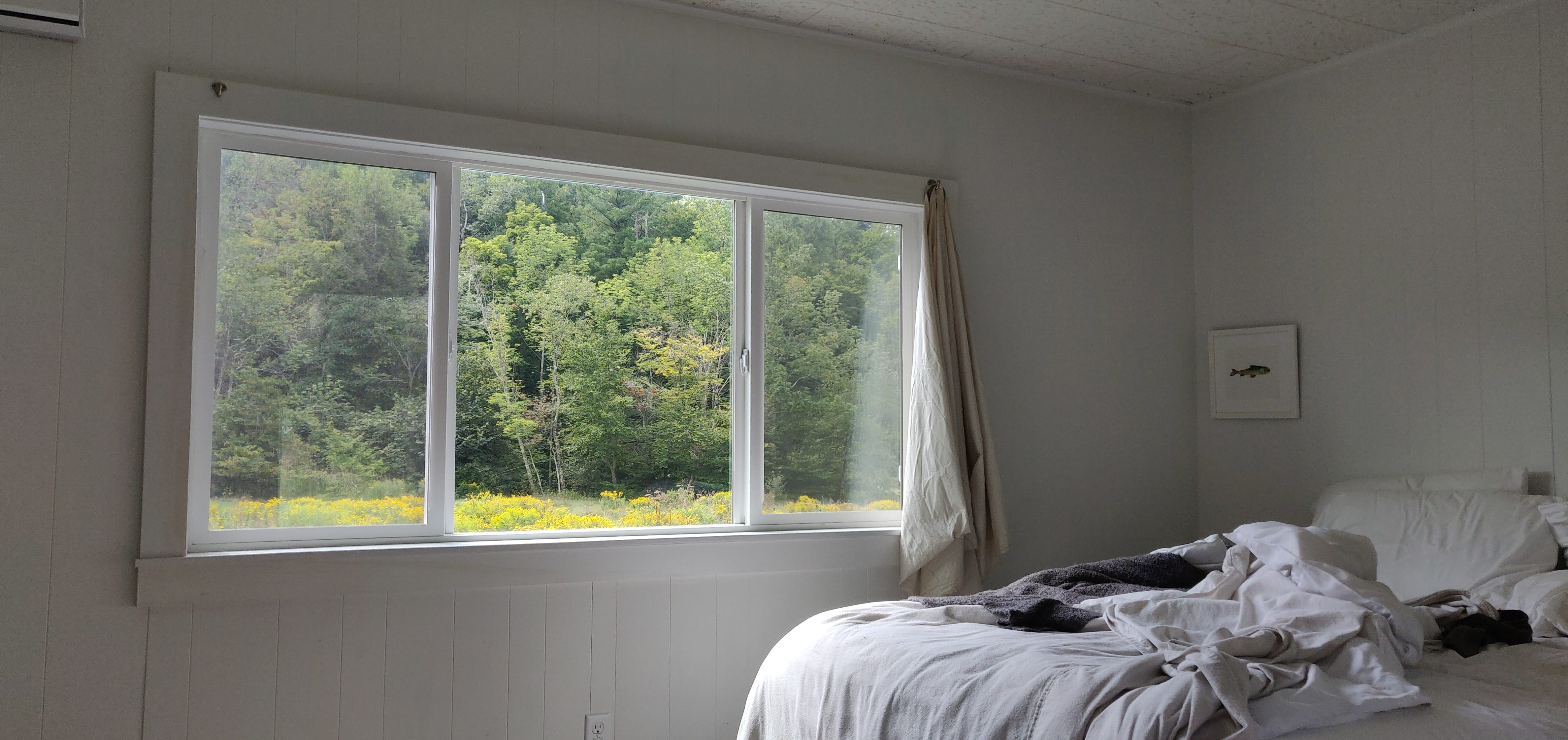
Every room is simple, with big windows overlooking a beautiful meadow, and a supply of firewood for the many firepits around the large property. There’s a creek with just enough water for a dip in the summer, a wooden barn full of books to curl up with, plus a small bar that serves local beer and cocktails in the evenings, and Pop-Tarts and coffee (with an optional flask) in the mornings.
A short walk away, there are hiking trails that wind up in the surrounding mountains, and an excellent craft brewery with genuinely great beer and a real community vibe.

But there’s one more thing that, in my opinion, gives Spruceton Inn its je ne sais quoi.
This special little nook of Upstate NY happens to be five miles down a seven-mile dead-end road with no cell reception. ✨
There is limited wifi available, so if you really need to connect to the outside world, you can. But for the most part, you’re totally off the communications grid, and it’s incredible. It’s the only time I’ve had this kind of disconnection outside of a full-blown backcountry trip.
I’ve craved that feeling since long before smartphones. There’s nothing I love more than being offline and doing something in the real world, without interruption. But recently, I’ve noticed that this desire, once niche, is becoming increasingly common.
Screen Fatigue Has Hit a Breaking Point
What used to feel like a personal preference now looks more like a collective correction.
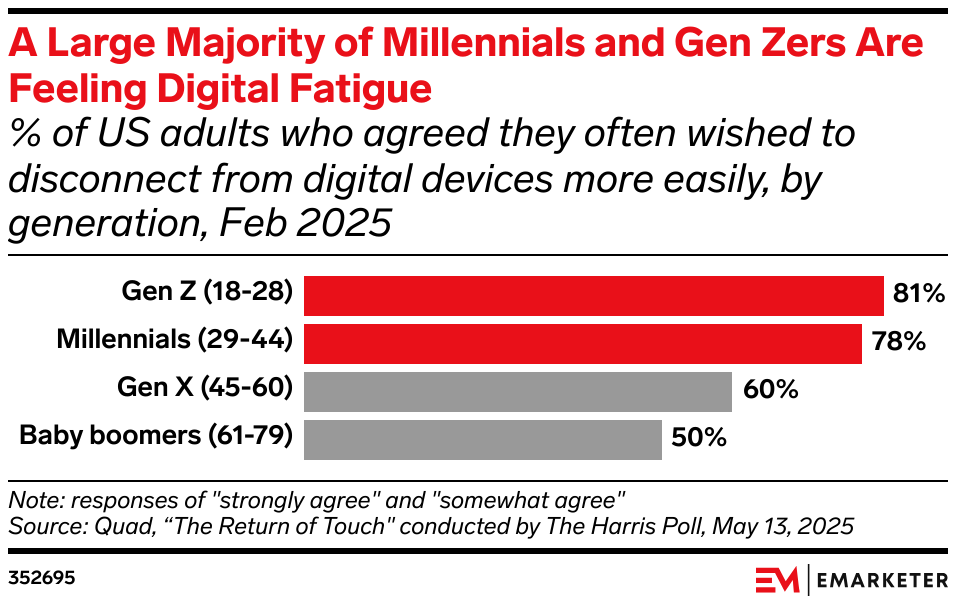
Screens didn’t suddenly become bad, but they have become overwhelming for a lot of people. Digital fatigue shows up across every generation, with a majority of U.S. adults saying they wish they could disconnect more easily.
What varies is the intensity. The younger someone is, the more likely they are to feel it. More than four in five Gen Z adults report this frustration, compared to roughly half of baby boomers, suggesting that those most immersed in digital life are also the most eager for relief.1
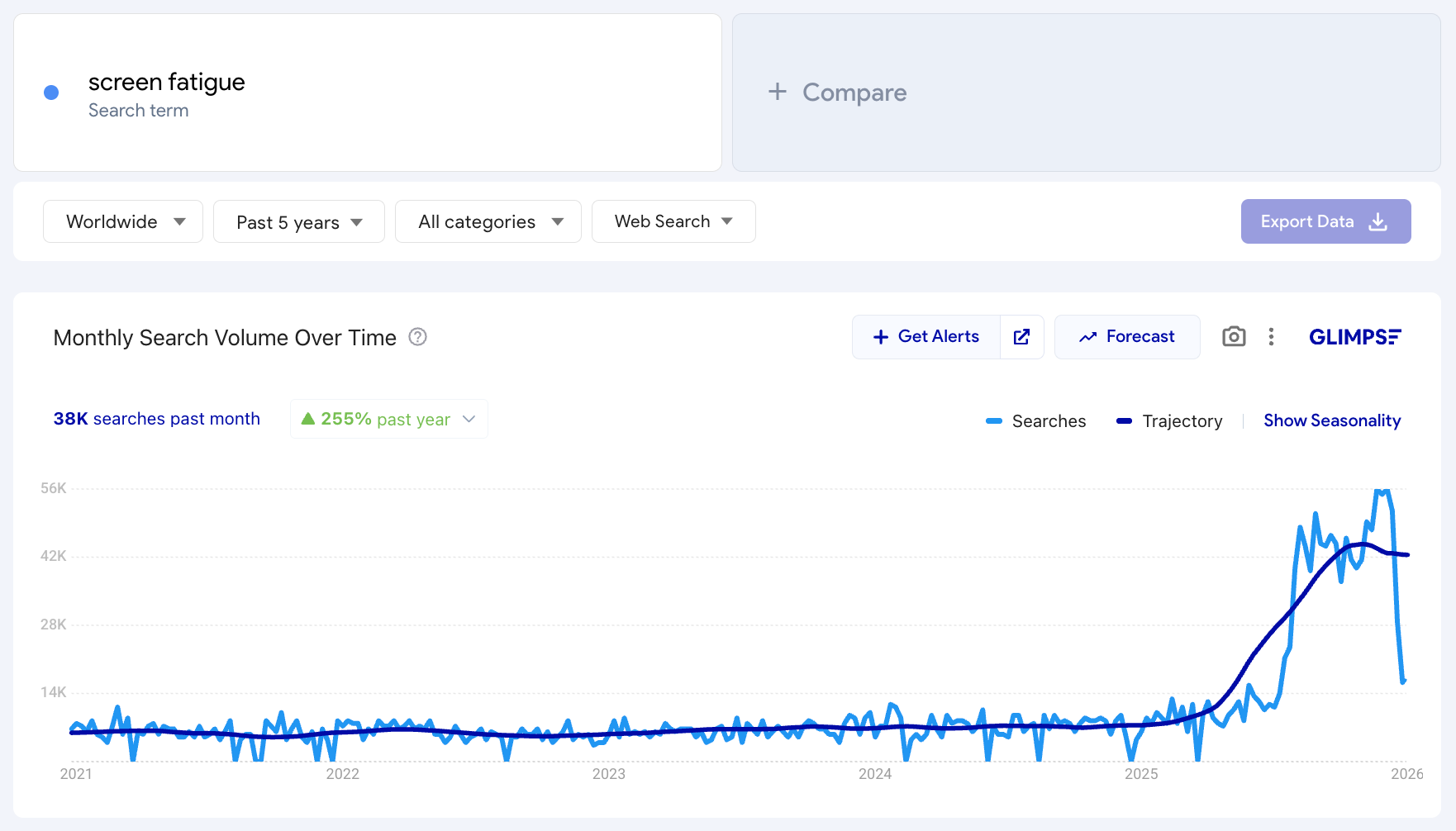
At the same time, people are looking for ways to step away. Searches for “screen fatigue” have climbed dramatically in 2025, up 255% in the past year.
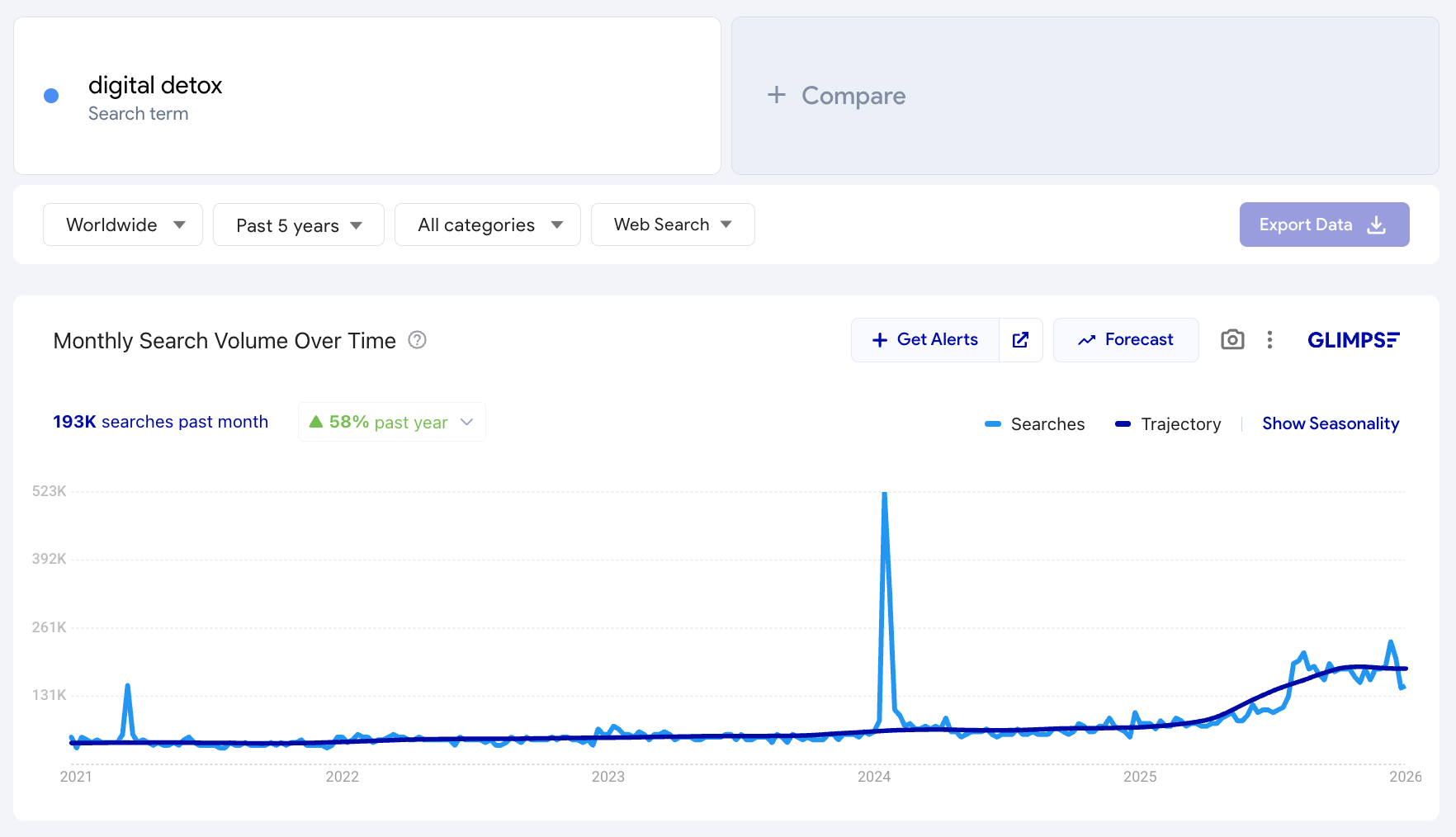
Similarly, searches for “digital detox” (a potential solution to screen fatigue) saw a 58% jump in the past year.
Then generative AI arrived and poured gasoline on the fire.
Algorithms today are optimized to maximize engagement and scale, often by feeding users ever-more personalized streams of content that reward speed and novelty over depth and nuance. That’s exactly the dynamic many researchers warn can lead to cognitive overload and algorithmic fatigue, where users are constantly processing information without resolution, increasing mental strain and lowering satisfaction.
Studies conceptualizing AI fatigue show that repeated interactions with generative, personalized content loops can deplete cognitive resources and contribute to emotional exhaustion.2
At the same time, the sheer scale of algorithmically curated content can make judgments harder rather than easier. Research on digital wellbeing and intelligent systems links increasingly AI-mediated environments with technostress and diminished user agency, particularly when feedback loops are opaque and relentless.3
This describes many online experiences these days: feeds that refresh endlessly without adding value, search results that all look alike, and news or social platforms optimized for clickbait over substance. In this context, screens start to feel like something you have to manage, not something that helps you.
The common advice is to “curate better feeds” or “use technology more intentionally,” but that assumes the burden should stay on the user. In reality, the environments themselves have changed. When content is infinite, repetitive, and increasingly synthetic, attention becomes a scarce resource people feel compelled to protect.
It’s no wonder that after more than a decade of growth, daily time spent on social media has finally started to decline.4
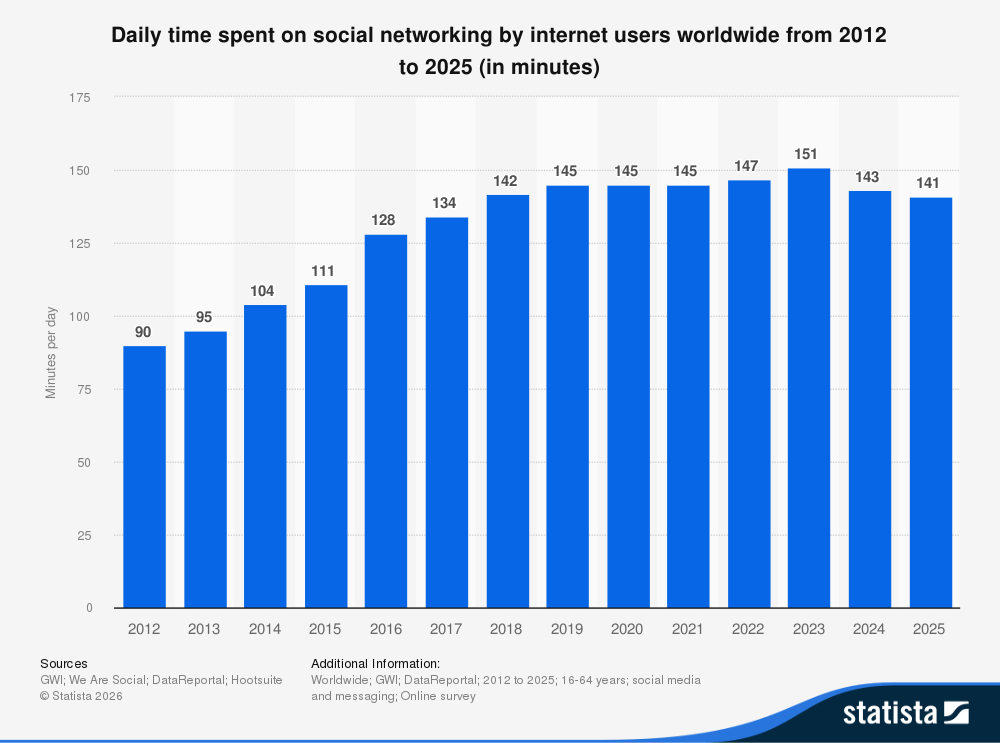
More and more people are finding that the best response isn’t to optimize harder inside digital spaces; it’s to step outside them completely. Offline experiences aren’t gaining appeal because people are anti-technology. They’re gaining appeal because they solve a problem the internet increasingly doesn’t.
Offline Is the New Online
In a world flooded with content, human presence becomes a major differentiator, and offline becomes a shortcut to quality.
Offline experiences are finite, and someone put real effort into them. You know when you’ve arrived, what you’re doing, and when it’s over, without having to constantly decide if something is worth your attention.
The shift from digital fatigue to real-world engagement shows up not just in surveys but in actual travel, event, and club data.
Travel Is Being Reframed Around Disconnection and Presence
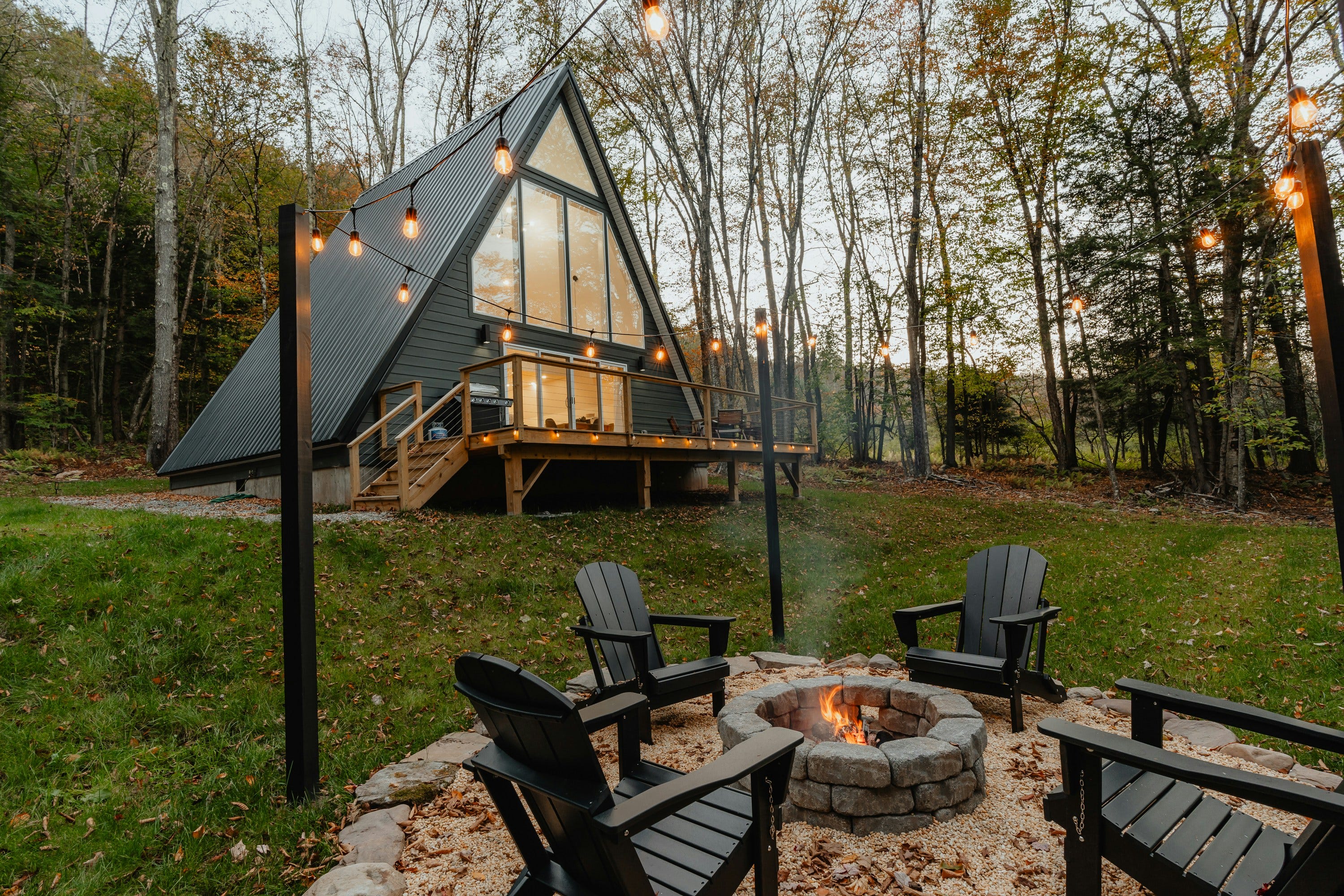
Travel is one of the clearest places this shift shows up. Wellness-oriented travel (which includes retreats, nature-based stays, and trips designed around restoration rather than stimulation) has become one of the fastest-growing segments of the global travel industry.
The global wellness tourism market was valued at roughly $850 billion in 2021 and is projected to more than double to $2.1 trillion by 2030, making it one of the fastest-growing segments of global travel.5
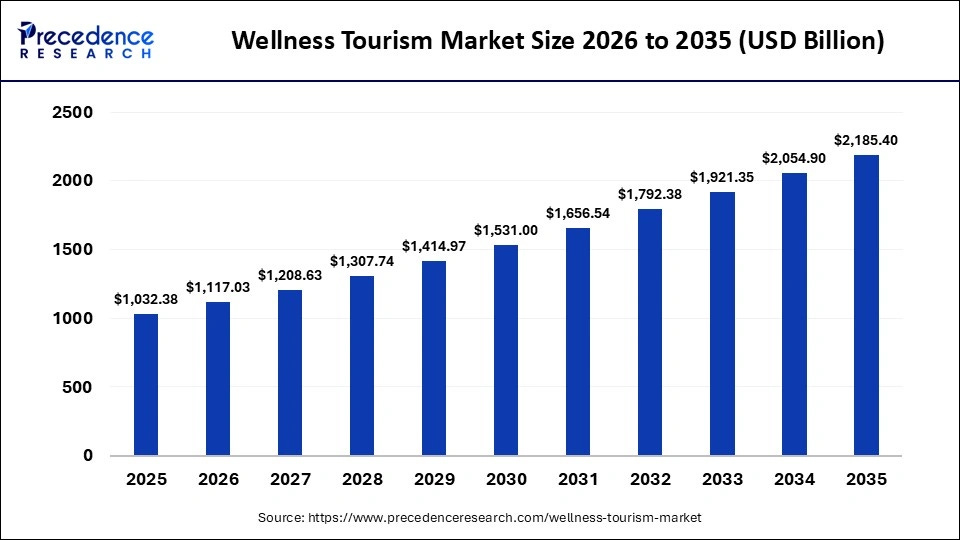
Within that, digital-detox and off-grid travel has emerged as a distinct subcategory. Market analyses estimate the digital detox tourism market at $1.42 billion in 2024, which is expected to double by 2033 as more travelers seek trips that explicitly limit connectivity.6
These aren’t fringe offers, they’re emerging responses to growing consumer demand for slower, more intentional trips. A study by Hilton even found that travellers are spending less time looking at the news and using social media while on vacation than in the past.7
In-Person Events Are Growing Again
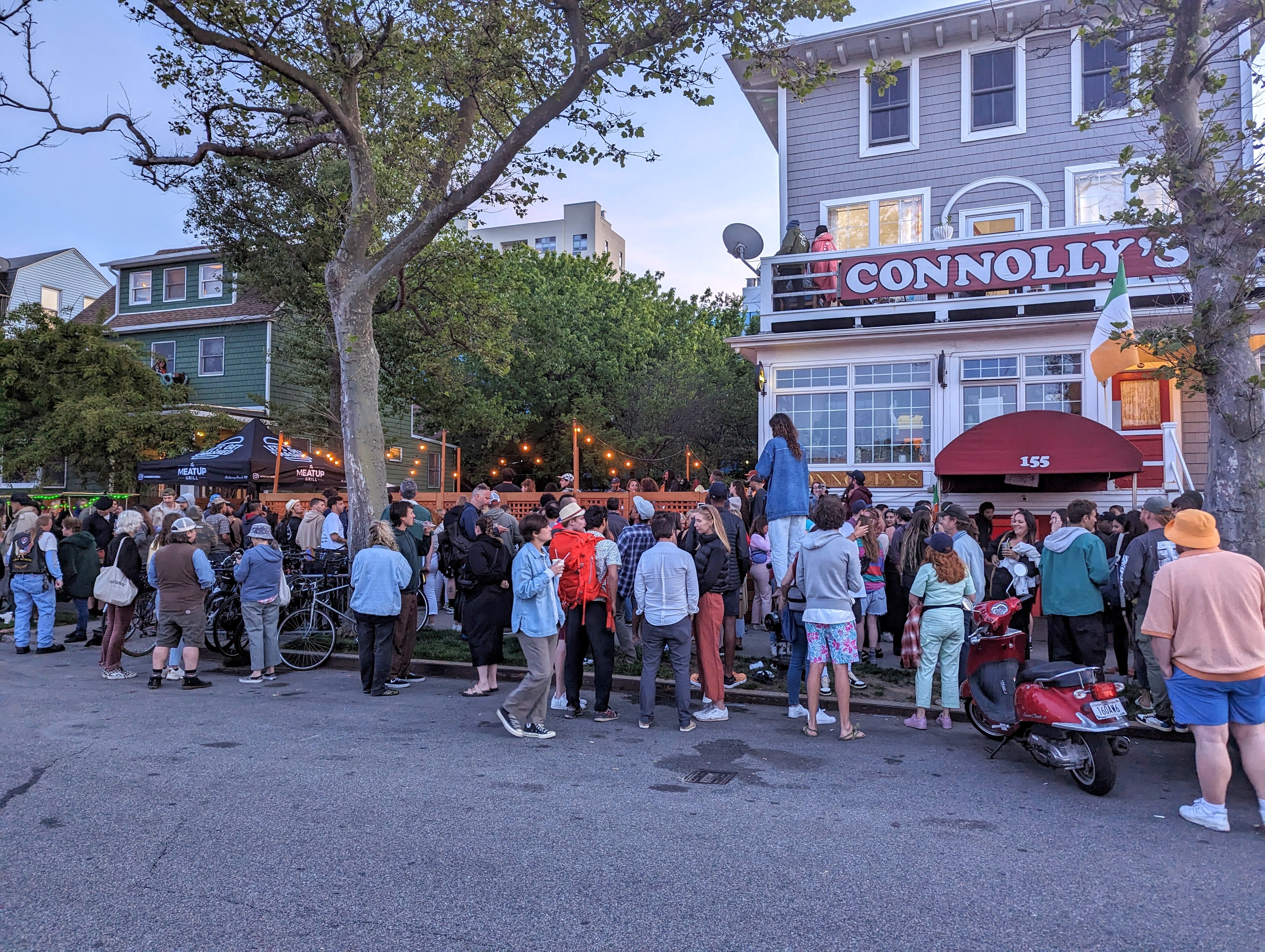
After years of disruption following the onset of the COVID-19 pandemic, in-person events are not only back, they’re expanding as a category. The global events industry, which includes festivals, concerts, gatherings, conferences, and live experiences, is sizable and projected to grow substantially over the coming decade. One report estimated the market size at around $1.23 trillion in 2024 and projected it to grow to roughly $1.9 trillion by 2029.8
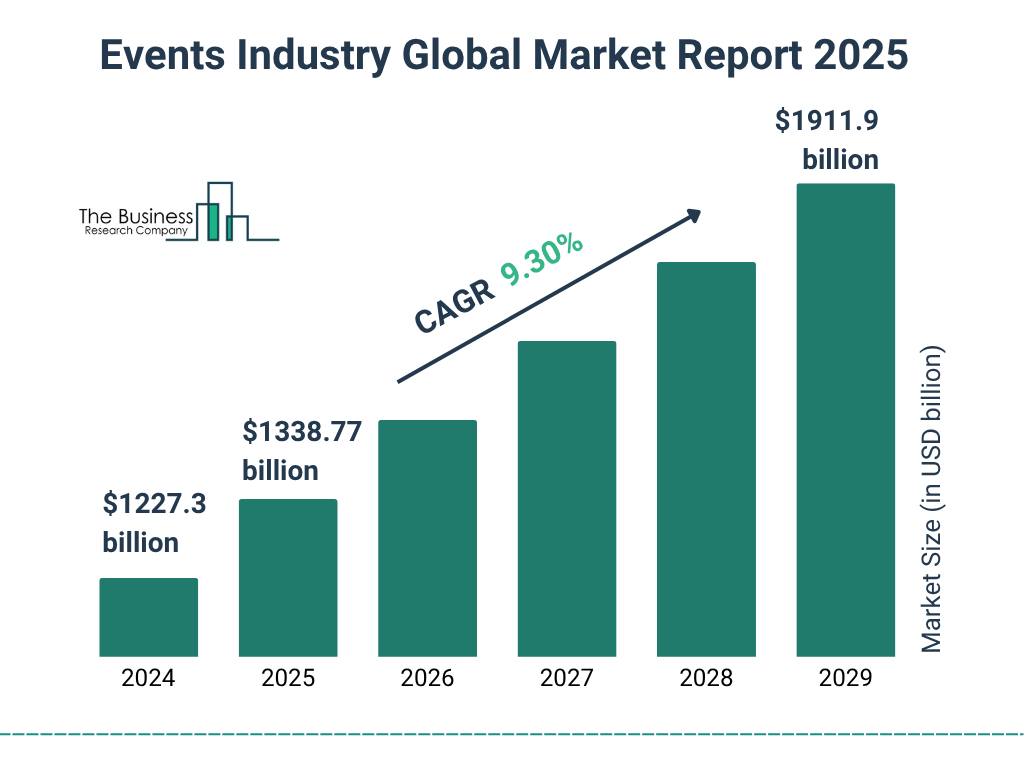
Event industry data reflects this shift as a broader trend rather than an isolated quirk. Over half of event organizers report increased attendance at in-person events in 2025 compared to prior years, signaling that demand for concerts, classes, social gatherings, and group activities is expanding.9
What’s important is why this growth is happening. In-person events offer something digital formats increasingly struggle to deliver: shared presence, finite time windows, and social energy that can’t be paused, replayed, or algorithmically optimized. As digital environments become noisier and more repetitive, live experiences have the upper hand.
Clubs and Community Groups Are Becoming Social Anchors

Offline engagement isn’t limited to structured events; it’s becoming a lifestyle through the rise of fourth spaces. While traditional third spaces like cafes or libraries remain important, Gen Z and Millennials are actively bridging their digital lives with physical social worlds by forming niche community anchors.10 From hobby groups to run clubs and sober-curious meetups, these gatherings are forming close friendships rather than one-off interactions.11
Even outside formal reports, broader behavioral signals support this. For example, attendance at dating and singles events increased by 42 % from 2022 to 2023 as younger adults grow weary of digital swiping and seek authentic, in-person connection.12

The Rise of Unshittification: Reclaiming the Real World
This data all points to a clear behavioral shift: people are allocating more attention and energy to real-world social experiences that digital spaces have struggled to deliver.
This aligns with a broader pattern I outlined in my 2026 marketing forecast: as AI accelerates content production and digital environments become more synthetic, value increasingly bifurcates toward experiences designed for humans first (physical, intentional, and difficult to automate).

Marketing in 2026 must align with unshittification: the demand for experiences that are less noisy and more intentional. The unshittification trend (a play on the online enshittification phenomenon) is a growing movement in which people are actively reclaiming their time, attention, and sanity by stepping away from cluttered, algorithm-heavy digital platforms.
In 2026, this has evolved from a niche preference into a major cultural shift toward intentional offline experiences.
For entrepreneurs and builders, this shift creates a clear opportunity to design products and experiences that leverage this move offline.
8 Offline Business Ideas Built Around Real-World Connection
Each of the business ideas below leverages the same underlying trend: attention is moving offline, and people are actively seeking real-world connections.
Many of these ideas don’t require you to sit behind a screen all day. They’re built around organizing, hosting, facilitating, or enabling offline experiences, with technology playing a supporting role rather than demanding constant attention.