


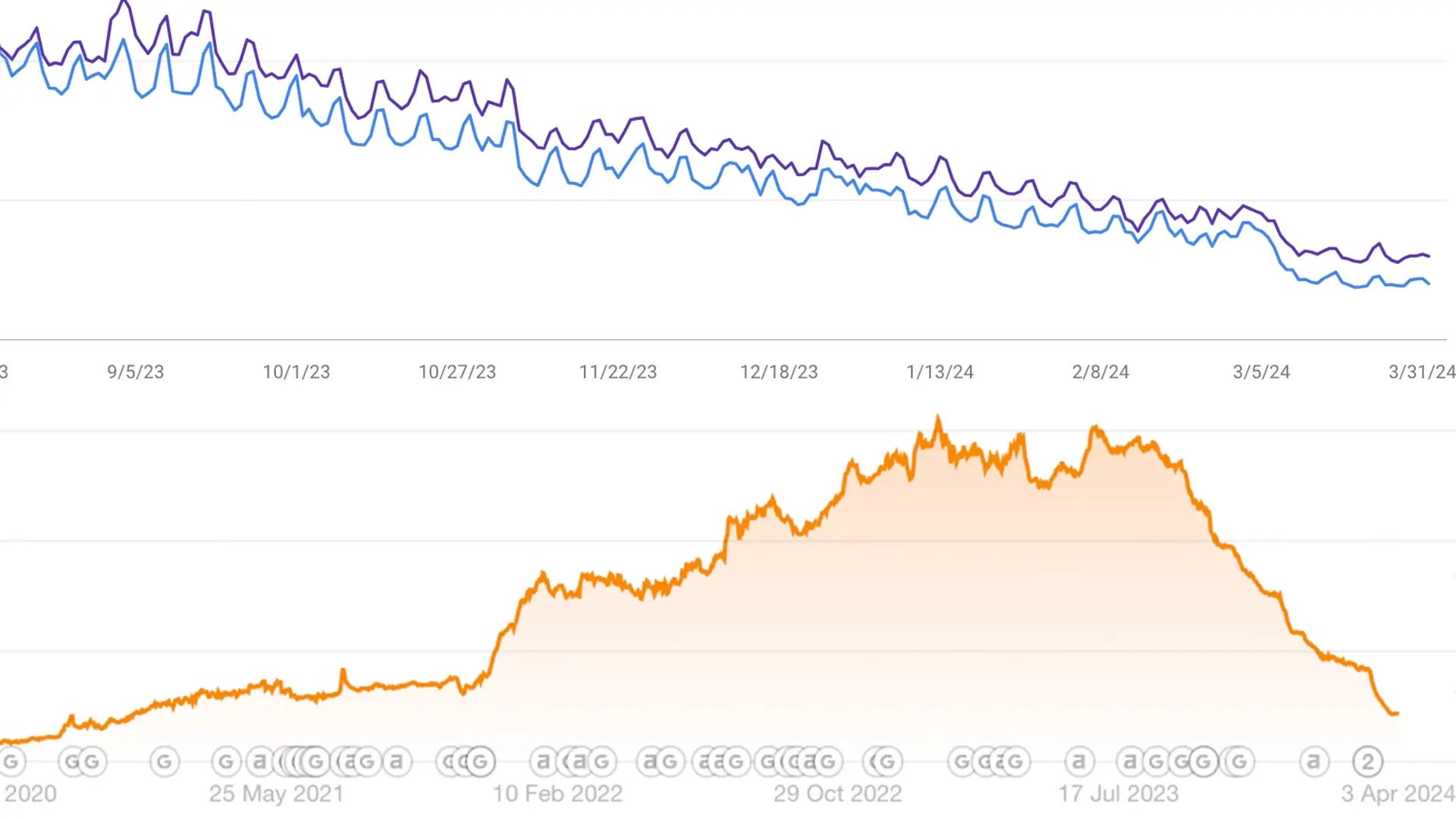
In September 2023, a web company called Retro Dodo had been doing everything right. They published original reviews of retro gaming gear, written by experts who knew the difference between a Game Boy Color and a Game Boy Advance. But one day, Google shipped an algorithm update, and Retro Dodo’s traffic fell off a cliff. The site lost roughly 85% of its organic traffic and the revenue that traffic generated.1
That same risk looms over most companies today, and it’s bigger than any single algorithm update. Almost everything marketers treat as an audience is rented rather than owned. Think of the followers you spent years growing on Instagram, the LinkedIn audience you interact with every week, the Google rankings that send you traffic, and the customers you reach through paid ads. Every one of them sits on a platform that can change the terms whenever it likes, and lately the terms keep moving in the same direction. Rent is going up.
Key Points
Almost every audience you rely on is rented. Social reach, search rankings, and paid ads all sit on platforms that keep raising the price and can change the terms overnight.
Your newsletter list is the exception. You own the contact details, so you can reach people directly, with no algorithm deciding who sees you.
An owned list pays back and holds value. Email averages about $36 back per $1, and Morning Brew and The Hustle were acquired largely for their subscriber lists.
Start building it now. Give people a real reason to opt in, and build somewhere you can export the list and take it with you.
Rented Audience vs. Owned Audience: What’s the Difference?
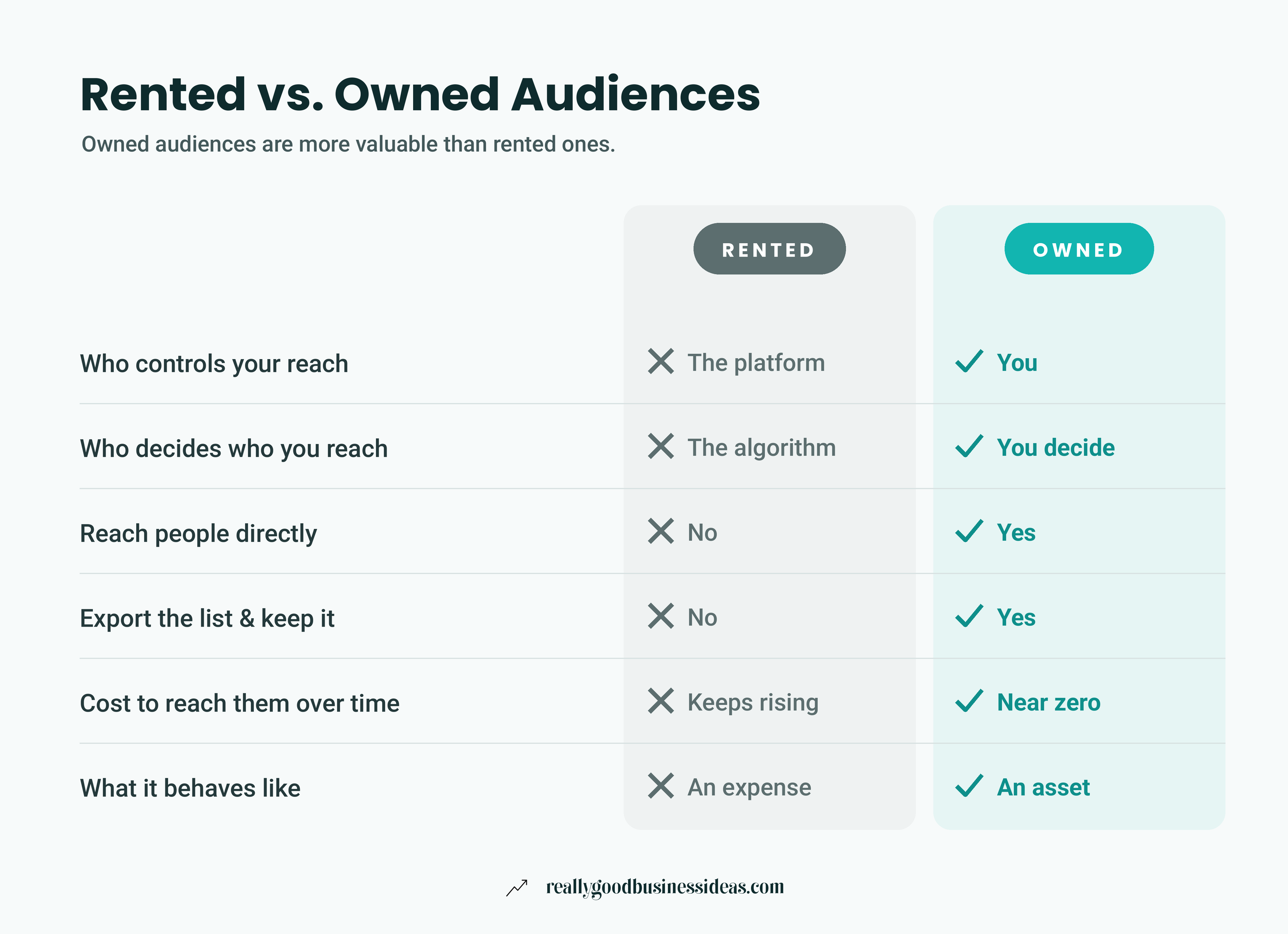
Two kinds of audiences sit behind every marketing plan: rented and owned. Most teams treat them as interchangeable, but owned audiences are more valuable than rented ones.
What Is a Rented Audience?
A rented audience is one you can only reach through a platform that sets the terms. You don't hold anyone's contact details, so the platform decides whether your message gets through, and it can change the rules whenever it likes.
You can’t message your social followers directly; you reach them only when the algorithm chooses to show them your post.
Your search rankings sit at Google’s discretion, and a single core update can bury you overnight.
Paid ads put you in front of people, but you’re renting that reach by the click, and the platform keeps raising the price. For example, Google's average cost per click has risen every year.2
AI assistants now answer your customers’ questions directly, often before anyone lands on your site at all.
You do not own any of these relationships. The platform does, and it can change the terms on you at any time, whether you pay in ad dollars or in the content you produce to earn organic reach.
What Is an Owned Audience?
An owned audience is one you can reach directly, whenever you want, because you hold their contact details. You press send, and your message goes straight to them with no platform in between.
You can email your subscribers directly whenever you want, and no one can take that list from you.
A text message reaches your subscriber’s phone within minutes, and no algorithm decides who sees it.
A physical letter shows up in a mailbox no platform can throttle or shut down.
An online community you manage comes with a member list you can export any time.
In every case, you own the contact info, so you can reach people directly, and no platform can throttle your reach or take your audience away.
This is not only a creator problem, and if you work on a brand team, it’s tempting to file Retro Dodo under “small publisher, not us.” That instinct is backward. Your brand’s follower count and its search rankings are rented on exactly the same terms as a solo blogger’s. The bigger the brand, the more revenue it has riding on channels it does not control and cannot appeal to.
Audience Rent Is Going Up
The audiences you rent get harder to reach every year. Several forces are driving up the cost of renting, and none of them is under your control.
Social Platforms Keep Shrinking Organic Reach
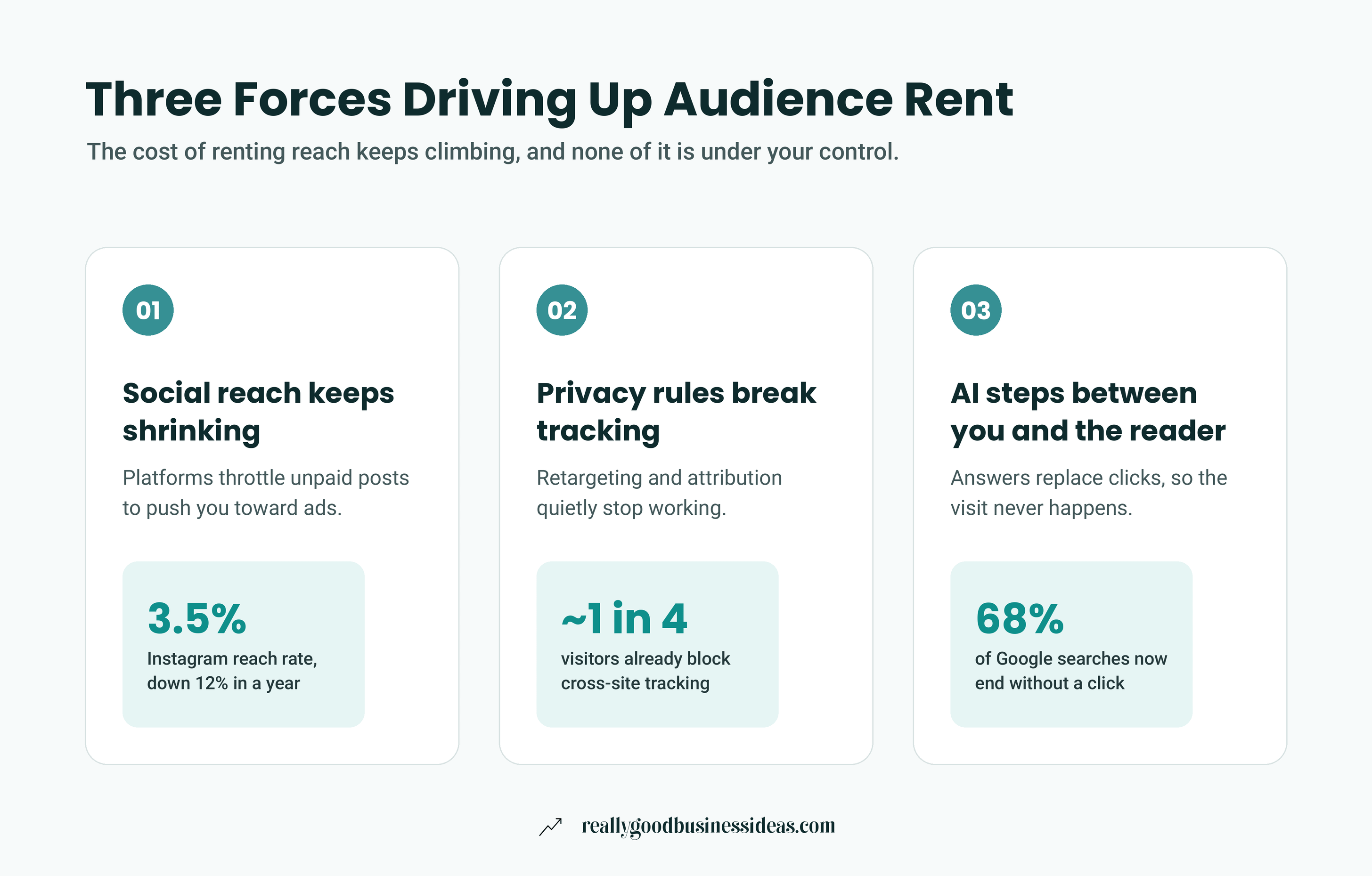
Organic reach on social platforms has been shrinking for over a decade. Facebook posts reached around 16% of a page’s followers in 2012.3 Today, that number sits closer to 1%. Instagram reach was only about 3.5% in 2025, down 12% from a year prior.4 LinkedIn organic reach dropped 34% between 2024 and 2025, measured across more than 600K posts.5 In 2026, you can literally build an audience of 100K and have only a few thousand people see what you publish.
Reach doesn't always erode slowly; sometimes it collapses overnight. In 2018, a site called LittleThings had 58 million monthly visitors, built almost entirely on Facebook. A single change to the news feed erased about 75% of its organic reach, and the company shut down within weeks, putting 100 people out of work.6 That was seven years before Retro Dodo. The pattern is old, and it has only picked up speed. If your plan depends on reaching your social followers for free, you are planning around a number that social media networks have spent a decade walking toward zero.
Privacy Rules Are Breaking Tracking
You have probably heard that the third-party cookie was dying. For years, it was the industry’s looming deadline, the thing every marketing team was told to plan around. Then Google reversed course, abandoning the phase-out in July 20247 and confirming in April 20258 that Chrome would keep cookies after all. That was a relief for anyone who had been dreading it.
But Chrome is not the whole web. Safari and Firefox have blocked third-party cookies by default for years, and once you add privacy-first browsers like Brave, roughly 20% to 25% of web traffic already runs with cross-site tracking switched off.9 Google keeping cookies alive in Chrome does not bring any of that tracking back. For about a quarter of your visitors, the tracking that your retargeting and attribution depend on is already gone and won't come back.
Privacy law adds another layer. In Europe, the GDPR requires opt-in consent before you can track anyone, and only about 45% of visitors agree to be tracked, under 25% in markets like Germany and France.10 Americans accept cookies far more often, but that is changing. California’s CPRA and a growing list of state laws now give people the right to opt out,11 and some browsers send that signal automatically.12
People are reasonably choosing more privacy, and following them around the web is a fading strategy no matter what Chrome does with cookies. The audience worth building is the one who chooses to hear from you.
AI Is Stepping Between Content and the Reader
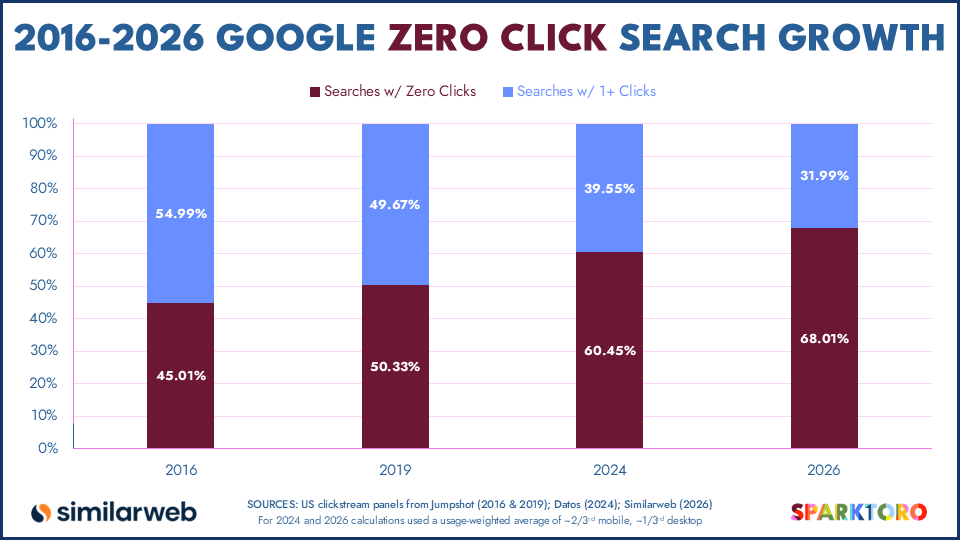
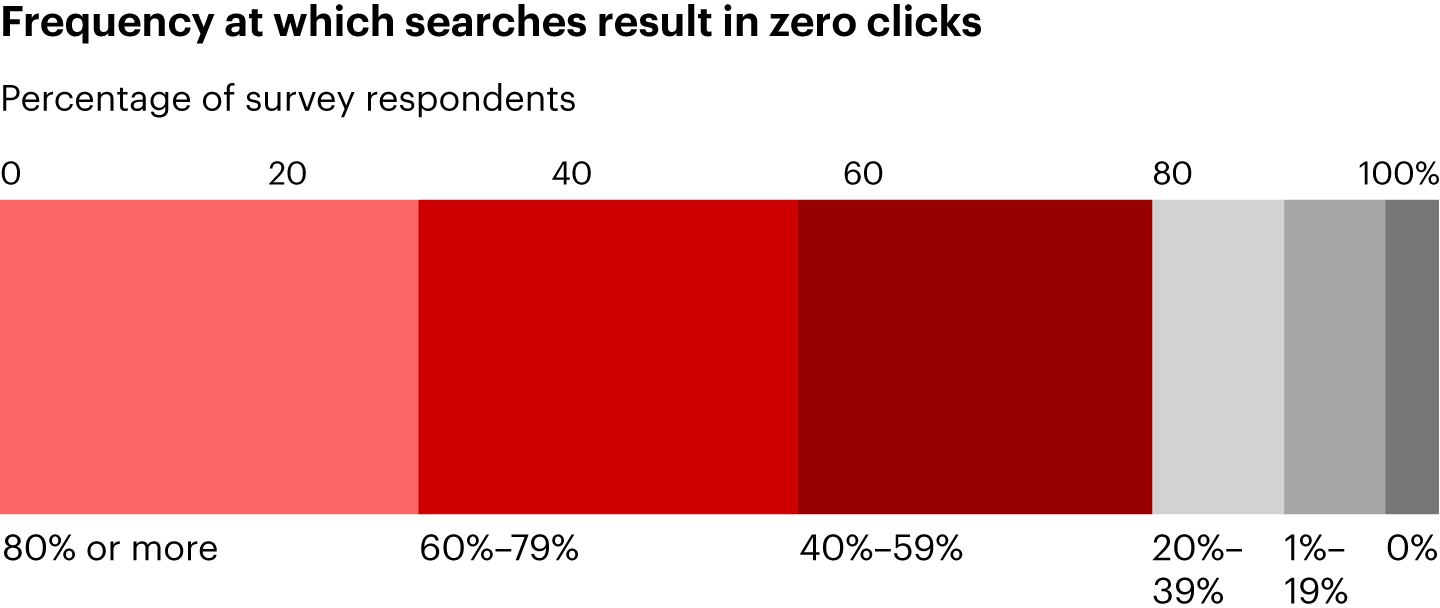
The newest landlord is AI, and it may be the most extractive of the bunch. When an AI model answers the question using your content, the visit to your site never has to happen. Sometimes that answer sits right at the top of Google. In the first four months of 2026, 68% of Google searches ended without a single click, up from about 60% in 2024, according to SparkToro and Similarweb.13
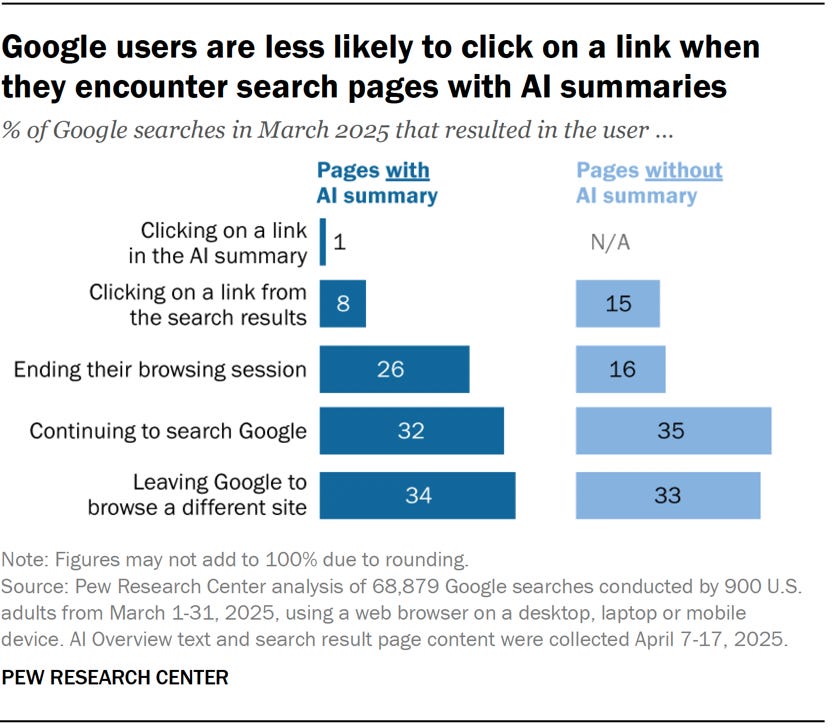
Pew Research isolated the effect in real browsing data: When an AI summary appeared, people clicked a traditional link just 8% of the time, compared with 15% when it did not.14
Other times, people skip Google altogether and ask an AI assistant like ChatGPT or Perplexity directly. Bain & Company reports that these assistants are taking over the research and product questions that used to begin on a search engine, and it estimates the shift to answers without clicks is cutting organic web traffic by 15% to 25%.15
The platforms vary, but the direction is the same. The cost of renting reach keeps going up, and doing your job well doesn’t change that.
How Much Is an Owned Audience Worth?
An owned audience is worth more than almost any channel you rent, in two ways. It brings in revenue like a high-ROI marketing channel, and it holds its value like an asset you can sell.
An Owned Email List Returns About $36 for Every $1
For most companies, email returns $10 to $50 for every dollar spent, about $36 on average.16 Boston Consulting Group and Google studied brands that built their marketing on first-party data and found the mature ones saw up to 2.9x the revenue and 1.5x the cost savings of brands that didn't.17 First-party data is what you collect directly from your own audience: The email address someone gives you when they subscribe, plus the opens and clicks you can see once they are on your list.
When you send an email, it reaches the people who asked for it, not whoever an algorithm picks that day. You can count on reaching them week after week, which is something no rented audience offers.
An Owned Email List Appreciates Like an Asset
It is easy to treat a newsletter as one more content channel, a box to check off each month. But a list behaves more like an asset, gaining value the longer you hold it.
Rented reach is an expense you pay again every month, and the price, whether in ad dollars or the content you produce, climbs while the reach shrinks. A social post reaches whoever the algorithm serves it to that day, and the count resets to near zero with your next post.
An email list runs on the opposite logic. A subscriber, once added, stays on your list, so you can reach them again next week and next year, at almost no added cost each time you press send. Those subscribers tend to stick around, and when you launch a new product or run a promotion, you can put it in front of every one of them for free.
The list itself can be worth millions. In 2020, Business Insider’s parent bought Morning Brew and its 2.5 million subscribers in a deal valued around $75 million.18 A year later, HubSpot bought The Hustle and its 1.5 million subscribers in a deal valued around $27 million.19 Neither was buying back issues. They were buying access to millions of inboxes.
The catch is that it takes work. Building a list is slower than buying reach, and a list you neglect will decay like anything else. Owning an audience is more work up front than renting one, but once it’s built, that work keeps paying you back.
Start Building Your List Now, Before You Need It
The most valuable owned audiences took years to build, which is exactly why the worst time to start one is the moment you finally need it. Every month you spend renting is a month you pay more and own less. You do not need a big launch or a polished newsletter to begin, just a way to collect email addresses now, while the stakes are low. From there, three things turn that into an audience you own: A reason for people to subscribe, a way to keep growing the list, and a platform where you can own your list.
Give People a Real Reason to Subscribe
A signup form on its own is not a strategy. People guard their inbox, and they hand over an address for one reason. They expect something in return they can’t get anywhere else. Before you reach for popups or lead magnets, answer the harder question. What do you know, or have access to, that your audience wants in their inbox? For example, OpenAI’s policy team built a 32K-subscriber publication out of its thinking on AI governance, and Shopify drew a fast-growing audience out of merchant stories and data from millions of stores. When you have something people want, the signups take care of themselves.
That same original content does two things at once. It is also what AI tools increasingly cite when someone researches your category, and a majority of B2B buyers now reach for an AI chatbot before Google when they start looking.20 The work that grows your list makes your brand easier to find in the answers that are replacing the search results page.
Turn Rented Reach Into an Audience You Own
You are going to keep renting attention, and you should. Ads, searches, and social media are how most new people find you in the first place. But don't let it end there. When someone new discovers your brand online, invite them to subscribe so you can reach them again for free instead of paying to find them next time. Watch, I’ll do it right now. :)
Build Where You Own the List
Wherever you build it, one test matters:
Can you export your subscribers and take them with you? If you can, the list is yours. If you can’t, you are renting again, no matter how big the audience gets.
That is why your main audience should not live on social media, where the followers are never yours to move.
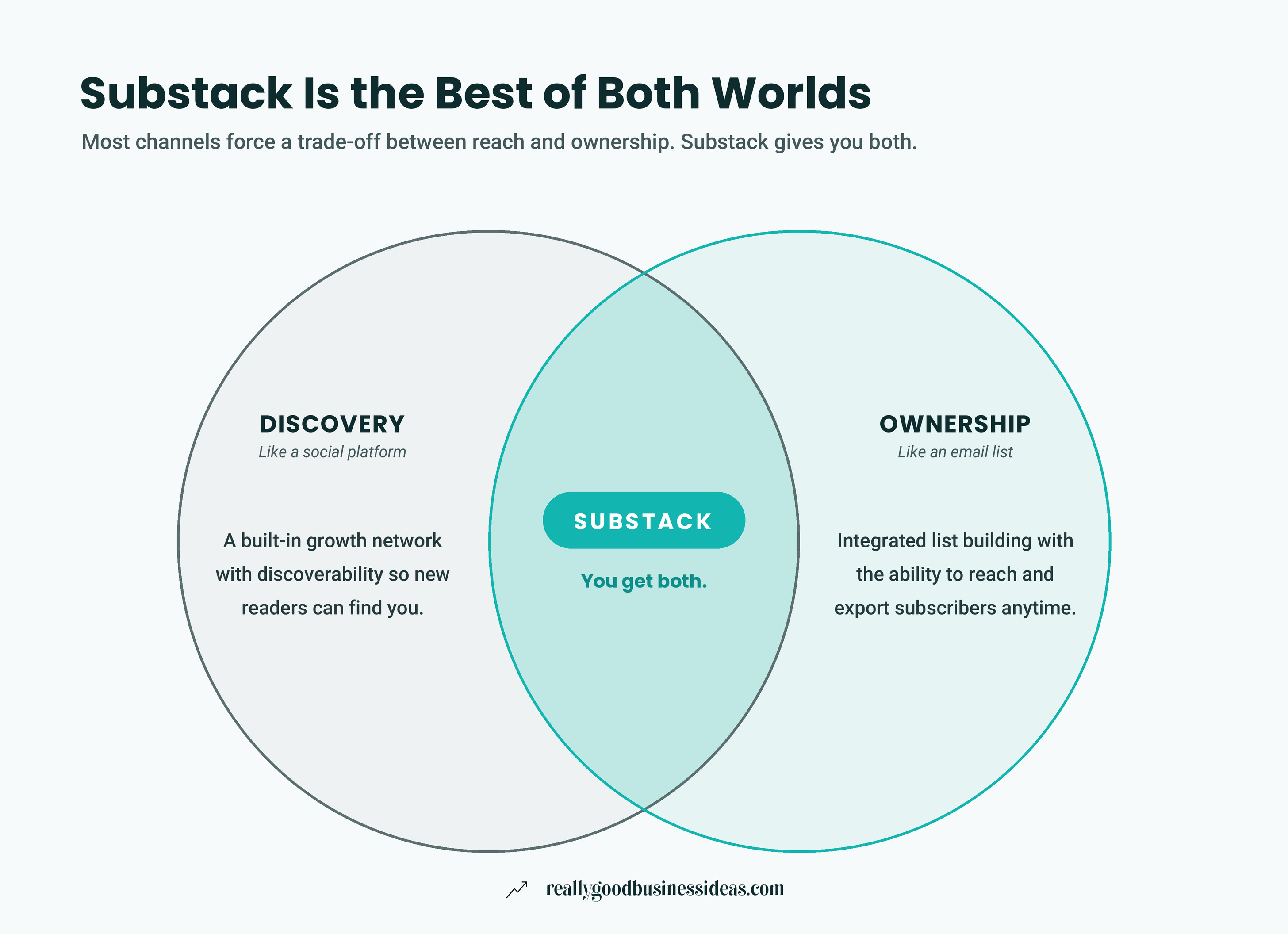
Substack is one strong option because it passes that test and solves a tradeoff at the same time. Normally, you choose between discovery and ownership. Social platforms hand you discovery but keep your audience, while a plain email tool gives you ownership with no built-in way to get found. Substack gives you both. Its network and recommendations can put you in front of new readers, and its algorithm is built to turn readers into subscribers rather than just rack up views. The subscribers you earn are then yours to export and keep, which a social following can never be. That is the rare best of both worlds: Discovery you don’t pay for, and an audience that stays yours.
The Audience You Get to Keep
Done consistently, this builds the one asset the platforms can’t take back: A list of people you can reach directly, on your own terms, no matter what Google or Meta or the next AI product does next quarter.
If you're weighing what an owned audience could look like for your brand and where a newsletter fits into it, I'd love to hear what you're working on. This is the problem I spend most of my time thinking about, and helping brands figure it out is the part I love most. Reach out anytime.
To endless possibilities,
Casandra
Need More Help?
Really Good Business Ideas Premium: A membership designed to make starting and growing a profitable business easier. Full archive access, DM support, and a library of tools and resources.
Substack Creator OS: A complete operating system for planning, writing, growing, and monetizing your newsletter, all in one connected Notion workspace. (Right now, it’s free for Premium subscribers).
Work With Me Directly: Book a 1-on-1 consultation or coaching call to get personalized help when you need it. Think of it as a focused working session to get unstuck, gain clarity, or move something forward.
Build Your Brand on Substack: Whether you’re still deciding or ready to build, I’ll meet you where you are. I offer executive briefings and hands-on strategy sessions for marketing teams that want to win on Substack.
With Substack you own your email list, but they have control over Substack notes.
Do you see Substack as straddling the line between rented and owned? 🤔