


Searching for your logo shouldn’t feel like an archeological dig.
But there you are, scrolling past Logo_Final.png, Logo_Final_v2.png, and Logo_ACTUALLY_Final.jpg, sweating because you have to attach one to an email right now and you have no idea which one has the transparent background.
When you’re creating fast (and across multiple platforms), it’s shockingly easy for things to drift: the wrong logo here, an outdated headshot there, a color that’s almost your color but not quite. But I’m here to offer you a better way to stay organized and keep your brand consistent.
The Real Benefit of a Consistent Brand
At its core, your brand is the promise you make to your audience. It’s the consistent meaning people associate with your business, and the promise that you will be the same every time.
It’s the reason a client chooses you over the cheaper option. It’s the instant recognition that makes someone click your email. In a crowded market, a strong brand is the only thing that builds trust at scale.
Your visuals, voice, and positioning support that meaning, but the brand itself lives in your reader’s mind. You’re just shaping it through repetition and consistency. Data backs this up: Consistent branding has been shown to increase revenue by up to 33%.1
But maintaining that consistency is impossible when your files are a mess. That friction is a silent killer of consistent branding.
It’s the 15 minutes you wasted hunting for your hex codes. It’s the media request you ignored because you didn’t have a current bio ready. It’s the invisible drag that turns a quick 5-minute task into a frustrating 30-minute ordeal.
When you create content across multiple platforms, that friction compounds. You grab an old logo because it’s convenient. You guess at positioning. You let standards slip just to get the post done.
Before long, your brand starts to feel fuzzy. Inconsistent. A little bit like it was stitched together by five different versions of you.
That’s exactly why I built a Brand Vault: a single, dead-simple system that keeps everything I need to stay consistent in one place. My visuals, my voice, my templates, my identity. All easy to find, all up to date, all ready for the next post, pitch, or project.
Today, I’ll show you what’s inside mine, and why every creator needs one.
What a Brand Vault Actually Is
A Brand Vault is the place where your entire brand lives. Not scattered across folders, screenshots, Canva projects, and old emails, but in one simple, structured home you can actually find.
Think of it as the command center for your identity. It’s where you keep the assets, decisions, examples, and templates that make your brand your brand.
1. Your Brand Foundation
This is the strategic foundation: the part that tells you who you are, who you serve, and how you show up.
It may include things like:
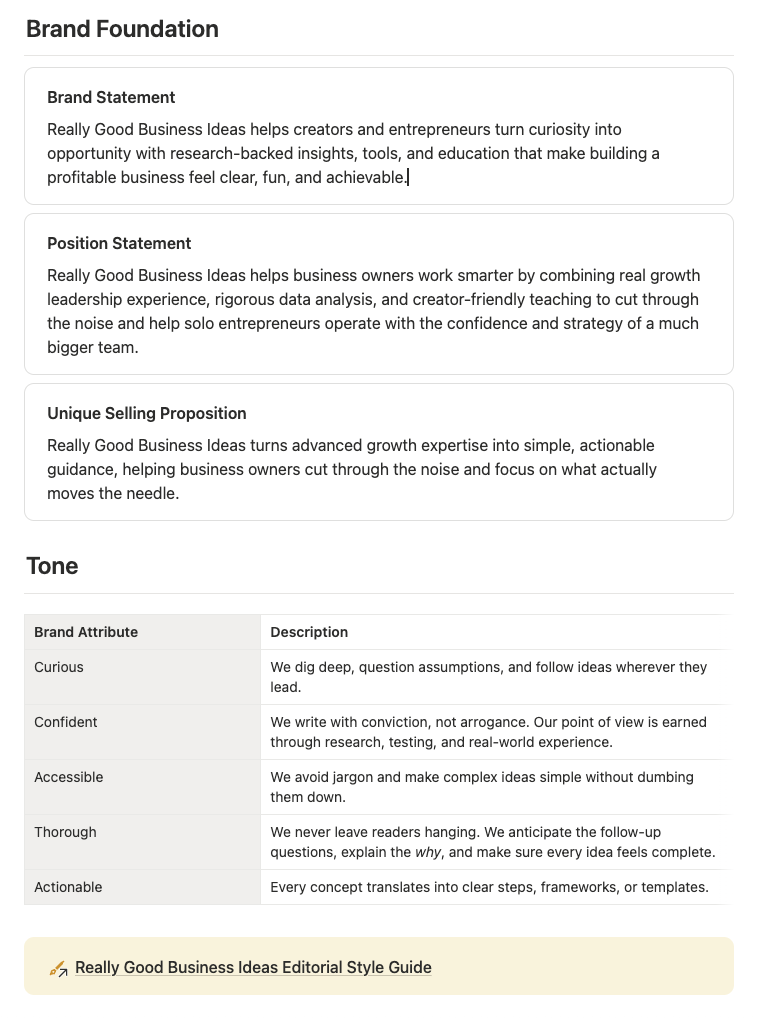
Brand Statement: a short, clear summary of what you do and why it matters.
Positioning: the space you occupy in your niche and what makes you different.
Attributes: how your brand should feel (confident, curious, irreverent, analytical, etc).
This layer keeps your identity true to itself even when you’re experimenting, moving fast, or writing in new formats.
2. Your Brand Assets
Your brand assets are the expressions of that identity: the things readers see, recognize, and associate with you across every platform.
This usually includes things like:
Logos in different formats, such as icon-only, wordmark, full logo, and black-and-white versions.
Color palette with hex codes and when each color should be used.
Typography with font names and when each one should be used.
Headshots and other professional photos related to your brand.
Author bio, publication short description, paid benefits, and other important copy.
These assets keep your work consistent, which builds recognition and trust over time.


Peek Inside My Brand Vault
Here’s the blueprint for a brand vault that actually helps you work faster and stay consistent. I’m opening mine up so you can see exactly how I organize the strategic foundation, visual identity, writing voice, and reusable assets that power my business.
Brand Foundation
Before you get to the visuals or templates, you need the anchor: the strategy that holds your entire brand together. This section captures the statements, promises, and positioning that shape how I show up everywhere else.
Brand Copy
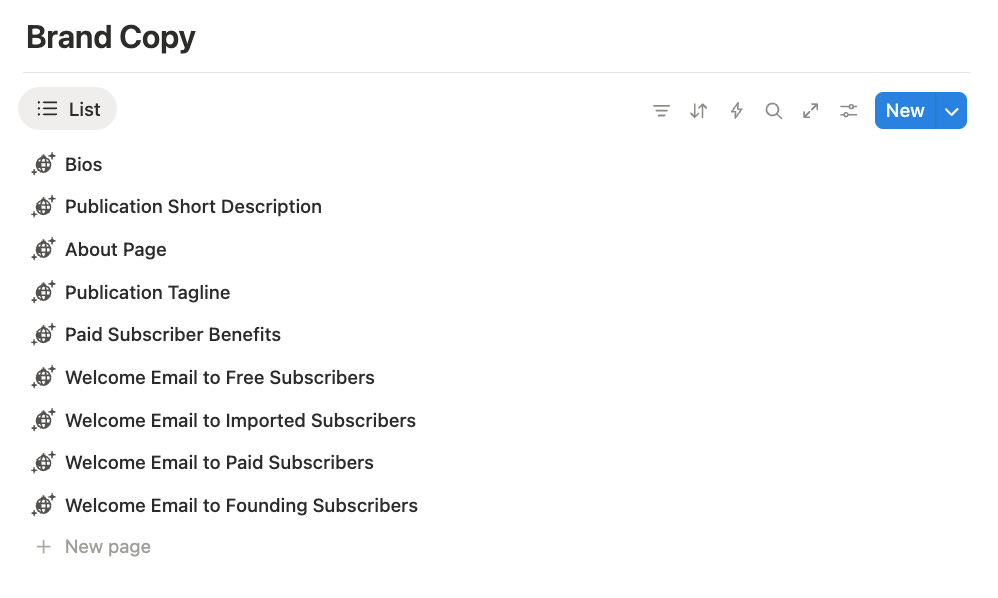
If visuals make your brand recognizable, your words make it memorable. This section centralizes and standardizes all my brand copy: the bios I use across the internet, the short descriptions, the welcome emails, the subscriber benefits—everything a reader sees before they ever get to my actual work.
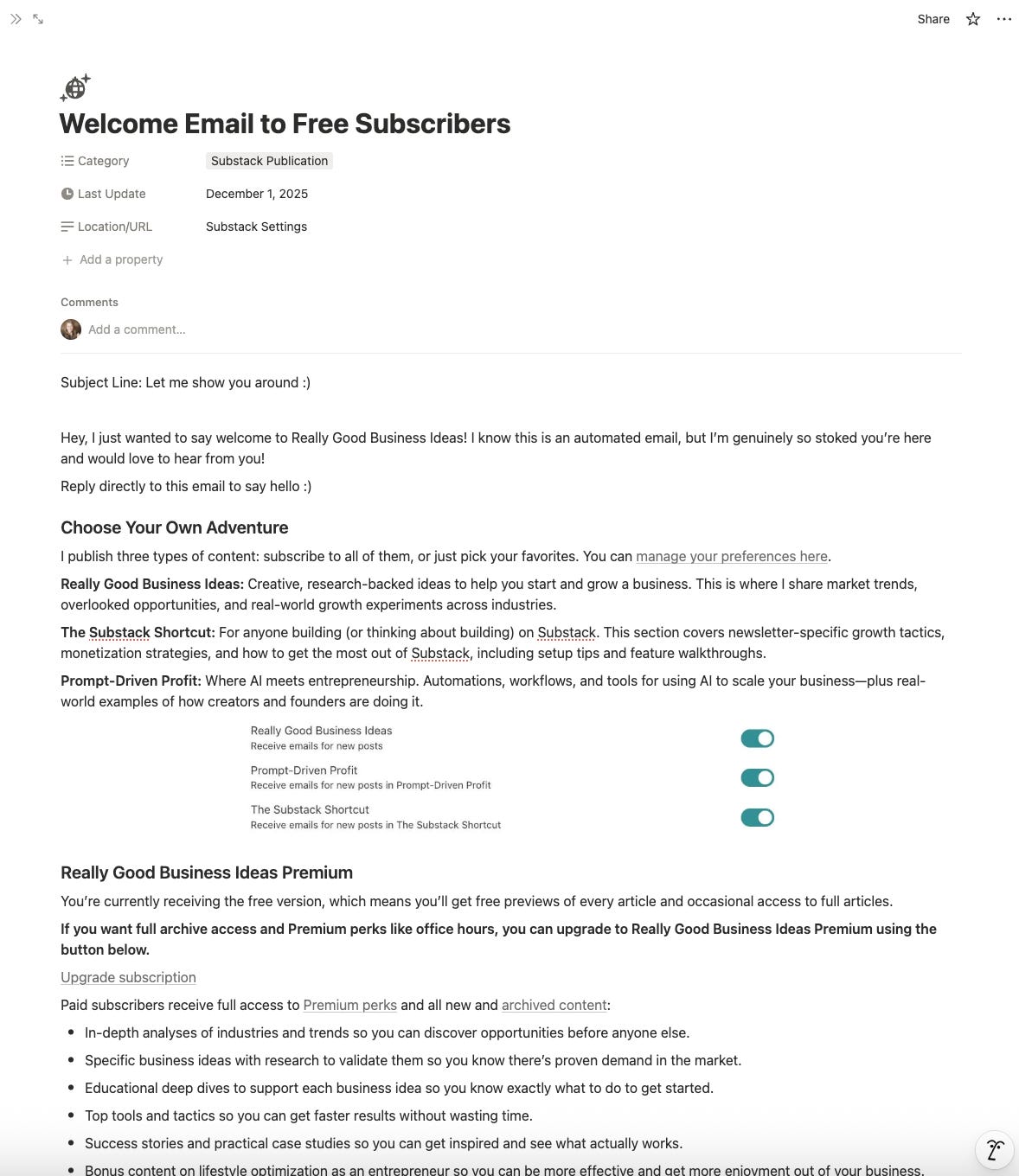
Each item in the brand copy database can be expanded to see the full version.
Visual Brand
Your visual identity is your brand’s shorthand and the quickest way for readers to know something is yours. My visual brand section collects everything that shapes that recognition: the RGBI color palette, typography, logos, social graphics, and photography. With everything in one place, I can move fast while staying consistent.


Just like with the brand copy, each of these database items can also be expanded for more info or to access attached files.

Testimonials Archive
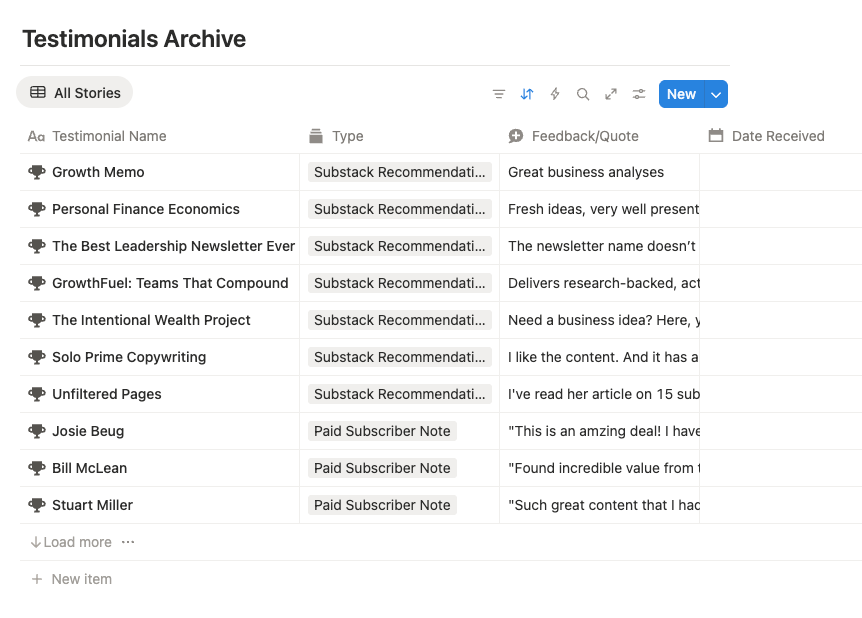
Testimonials are one of the strongest forms of social proof a creator can have, but only if you actually keep track of them. This archive collects every recommendation, subscriber note, and piece of feedback I receive so I always have the right quote on hand when I’m updating my website, pitching partnerships, or refining my messaging.
How to Build Your Own Brand Vault
Ready to create your own brand vault?
1. Decide Where Your Brand Vault Will Live
Pick one place (Notion, Airtable, Google Docs, or whatever you’ll actually use) and create a simple hub with a few core sections: brand foundation, copy, visuals, and social proof.
I like Notion because it seamlessly integrates docs, files, and databases, making it easy to keep everything connected and up to date in one place.
2. Write Down Your Brand Foundation
Capture the basics in plain language: who you serve, what you do, how you’re different, and the tone you want to show up with. Remember, something is better than nothing, so don’t let a quest for perfection stop you.
3. Centralize Your Key Assets
Drop in the things you reach for over and over: bios, short descriptions, logos, colors, fonts, headshots, social banners, testimonials, and any go-to templates you already use. Make sure to include any important parts of your Substack that you want to back up.

4. Make It a Living Document
From here on, any time you update your brand (new bio, new visual, new testimonial), it goes into the vault first. Over time, this becomes the single source of truth for everything you create.
If starting to build your own brand vault feels overwhelming, I’ve already done the groundwork for you. The Substack Creator OS includes a complete, plug-and-play brand vault plus all the resources that make brand-building easier:
Image specs by platform with pre-sized Canva templates.
A newsletter positioning worksheet.
An editorial style guide template.
Testimonial request email templates.
Swipe files of really good Substack author bios and publication short descriptions.
The goal is simple: allow you to create a clean, cohesive, professional brand, without burning countless hours on setup, scattered assets, or second-guessing.
If you want to see how it all works, you can read more about the Substack Creator OS below, or upgrade to get immediate access.

Premium subscribers can access the full OS instantly after upgrading.
A brand isn’t built in one big moment; it’s built through the tiny decisions you make every time you publish. When you have a system supporting those decisions, everything gets easier: your voice sharpens, your visuals stay consistent, and your audience starts to recognize you instantly.
Whether you build your own brand vault or use the OS to shortcut the setup, the result is the same: a clearer, more confident brand that compounds every time you hit publish.
To endless possibilities,
Casandra
THANK YOU. 🙏🏻 I have been working on my brand this past week, and coincidentally looking for a project to test out with Notion. I am so thankful this popped into my feed today!
Smart. Mine a spread out