

Substack Leaderboards Demystified: The Exact Criteria and Whether They Matter
A detailed breakdown of how the Rising, Top Bestseller, and New Bestseller leaderboards actually work and why they matter less than you think.

If you’ve spent any time on Substack, you’ve probably seen a leaderboard ranking on someone’s profile and wondered how it got there.
Maybe you’ve gotten a notification saying you’re “Rising” in your category, only to lose that status a few hours later without knowing why.
It's easy to get sucked in. Substack’s leaderboards are designed to trigger that dopamine hit that keeps you coming back (and sharing your rankings). But just because a feature is good at capturing your attention, that doesn’t mean it’s a metric worth chasing.
The good news is that the mechanics behind Substack’s leaderboards are less mysterious than they seem. Once you understand what each board actually measures, you can stop obsessing over your ranking and start making more intentional decisions about your growth.
Table of Contents
What Are Substack Leaderboards?
Substack leaderboards are ranked lists that surface the highest-earning and fastest-growing paid publications on the platform, organized by category. There is also a cross-category board that highlights publications that recently achieved Bestseller status for the first time.
To appear on any of the Substack leaderboards, you must have paid subscriptions enabled. There are no leaderboards for free publications right now.
The Substack leaderboards can be found through leaderboard tabs for each category or by clicking the ranking listed on a publisher’s profile. A publication can appear on multiple leaderboards (Rising, Top, Bestseller) at the same time, but it can only be associated with one category at a time.
Does Publication Category Selection Matter?
Category selection comes up a lot in discussions about leaderboards, so it’s worth addressing briefly. Because leaderboards are category-specific, the category you choose influences where your publication appears and how it’s grouped. A publication in a niche category like Philosophy is “competing” against a smaller field than one in Business or Politics.

Substack allows you to choose two categories, but you’ll typically only appear on leaderboards for your first category selection. The right approach is to choose the two categories that most accurately describe your publication’s core focus, and then move on. Categories help Substack and readers understand what your publication is about, but they’re not an important growth lever.
Substack Leaderboards Overview
Top Bestseller: Top 100 publications by category or country based on annual recurring paid subscriptions revenue.
Rising: Top 100 publications by category based on paid subscriber growth (regardless of publication size).
New Bestsellers: Publications that received their first bestseller badge in the past 30 days.
How Does the Top Bestseller Leaderboard Work?

The Top Bestsellers leaderboard ranks publications by annual recurring revenue (ARR), which is the total paid subscription revenue a publication generates over a year.1 As far as I can tell, Substack’s ARR metric does not factor in discounts. It appears to use the list price rather than actual realized revenue. This means a publication’s rank might be inflated if they frequently run promotions.
This board is updated daily and is category-specific.2 If your publication is listed in the Technology category, for example, it can only appear on that category’s Top Bestseller board, not on any other.
Because it is driven by ARR rather than raw subscriber numbers, the Top Bestseller board rewards a combination of audience size and price. Two publications with identical subscriber counts can rank very differently depending on how they price their Substack. A newsletter with 500 paid subscribers at $10/month generates $60,000 in ARR. Another newsletter with 500 paid subscribers at $5/month generates only $30,000. Although they have the same number of paid subscribers, these two publications will have very different rankings.

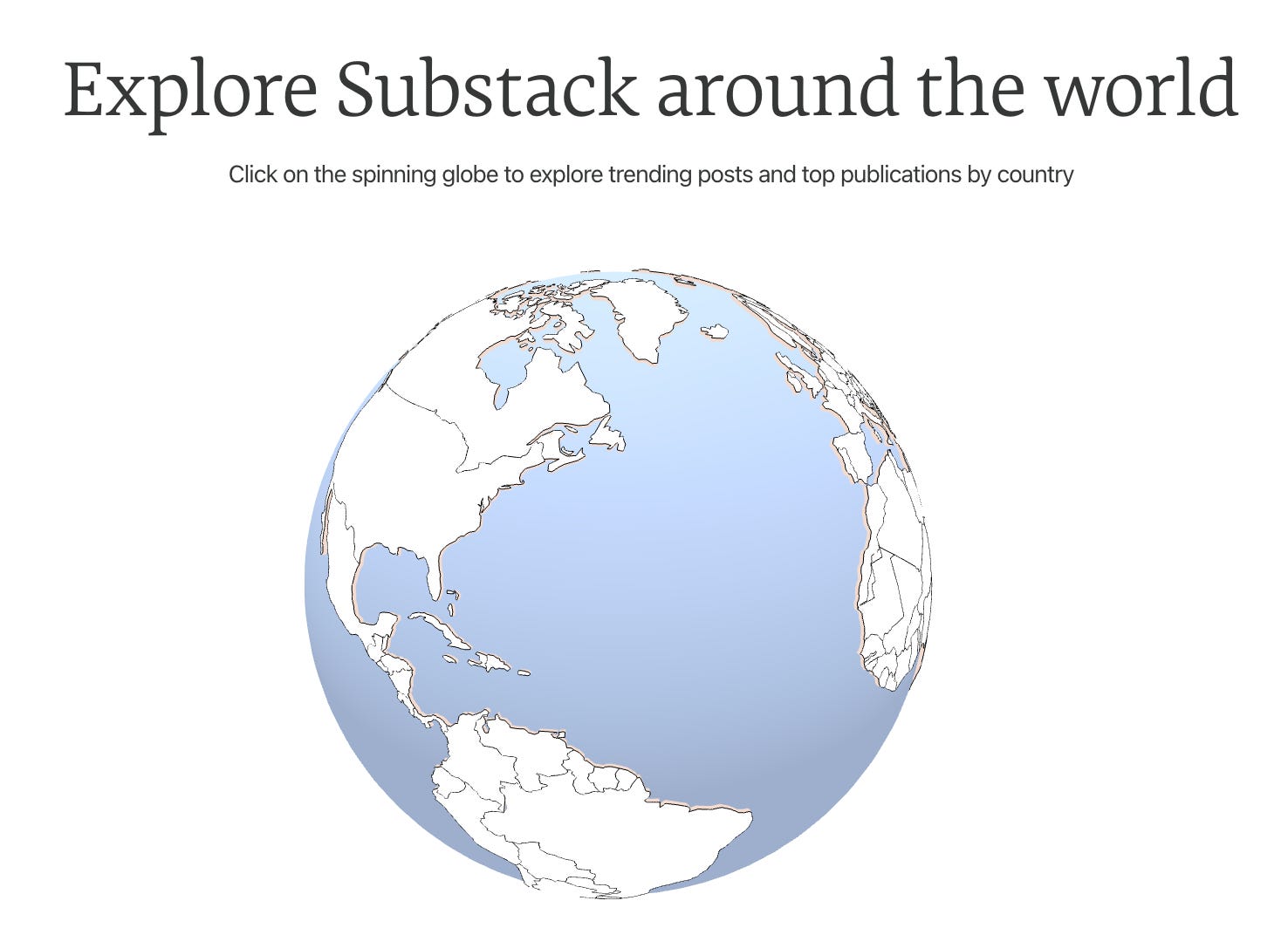
You can also view the Top Bestseller rankings by country at Substack Around the World, which covers 50+ countries. Rankings are based on the location of the publication or author.
How Does the Rising Bestseller Leaderboard Work?

The Rising leaderboard ranks publications based on recent paid subscription growth within a category.3 Publications that are gaining paid subscribers quickly relative to their baseline (regardless of their overall size) can appear here.
This board updates every few hours, which has an important implication: it is highly volatile. Writers regularly report appearing on the Rising board in the morning and dropping off by the afternoon. If you see yourself here, take the screenshot immediately because it might be gone by your next cup of coffee.
A publication can appear on both the Rising board and the Top Bestseller board simultaneously, which means that even established newsletters can show up on Rising if they experience a surge in new paid signups.
How Does the New Bestseller Leaderboard Work?

The New Bestseller board is the most distinct of the three. Unlike the other two, it is category-agnostic, meaning it pulls from across all of Substack’s 29 categories. It features publications that achieved Bestseller status within the past 30 days.4
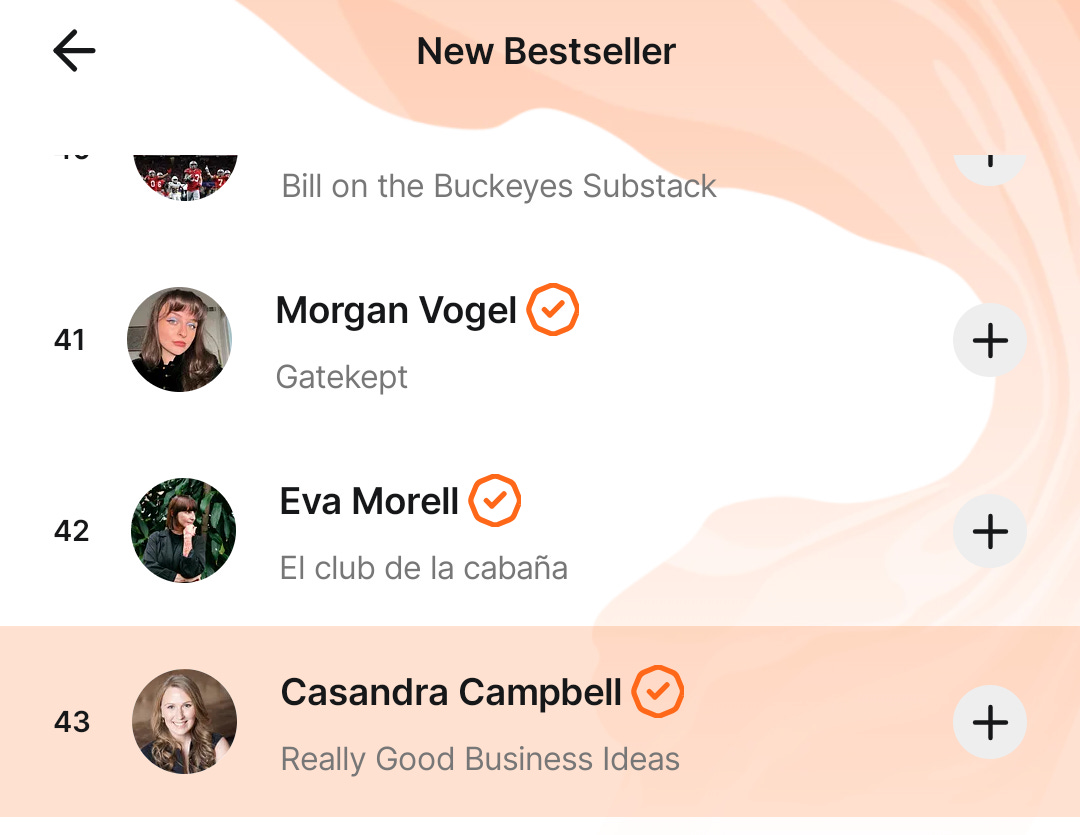
“Bestseller” status, as Substack defines it, is earned once a publication reaches at least 100 paid subscribers.
Because it spans all categories, the New Bestseller board tends to be eclectic. You might find a philosophy newsletter sitting next to a fitness publication, next to a local news outlet. A publication can appear on both the New Bestseller board and a category-specific leaderboard at the same time.
How the Bestseller Badge System Works
It is worth separating leaderboard rankings from Substack’s bestseller badge system, because many writers conflate the two. Badges are color-coded indicators of your active paid subscriber count. They appear next to your name wherever it appears on Substack.
White: 100+ paid subscribers
Orange: 1,000+ paid subscribers
Purple: 10,000+ paid subscribers

Note that free trials and complimentary subscriptions do not count toward your badge threshold; only active, paying subscribers do.
If you’d rather not display your badge publicly, you can hide it via the “Privacy” settings in your Substack author profile.
Do the Substack Leaderboards Actually Matter?
Leaderboards serve a real purpose on Substack, just not necessarily for you. They help new readers discover publications they might be interested in, and the gamification keeps authors engaged through the slow, unglamorous slog of audience building. Both of those things benefit the platform.
For most authors, though, leaderboards aren’t a meaningful growth lever. They’re a byproduct of growth, not a driver of it. A Rising appearance won’t meaningfully accelerate your subscriber count, and a Top Bestseller ranking reflects work you’ve already done rather than anything you can act on today.
The healthiest way to think about them is to celebrate a leaderboard appearance when it happens, use it as social proof if it feels comfortable, and then get back to the things that actually build an audience, like SEO and collaborations.
How to Think About Each Substack Leaderboard
It’s easy to get fixated on Substack leaderboards, but they’re really a distraction from more important metrics and more powerful drivers of growth. Here’s how I recommend thinking about each leaderboard.
Top Bestseller: Only the top 100 publications in each category make this list, and rankings are based purely on Substack subscription revenue. Discounts aren’t factored in, so the publications you see may be generating less than their position implies, and writers further down the list may be out-earning them through other revenue sources. It’s interesting context, but not something useful to focus on.
Rising: Treat it as a fun, fleeting milestone. Screenshot it, share it if it’s meaningful to you, then move on. It is too volatile to track week-to-week.
New Bestseller: Treat it as a legitimate moment worth celebrating and broadcasting as social proof. Earning your first Bestseller badge is a big milestone, and this board is Substack’s way of publicly recognizing it.
Substack leaderboards are a well-designed engagement feature. They're fun to watch, satisfying to appear on, and useful for onboarding new readers. But they're a reflection of growth, not a cause of it. The writers who build sustainable Substack publications do so by focusing on what leaderboards can't measure: a clear point of view, quality content, consistent publishing, and thoughtful paid subscriber benefits.
To endless possibilities,
Casandra

Love how you break down Substack features in a way that actually makes sense for the rest of us.
I agree — the Rising leaderboard is kind of like a fleeting moment. If you hit it, capture it and share it as social proof for your publication. But don’t make it a goal you obsess over, because it’s a rollercoaster. You’re in one day, out the next.
My take: Rising is more about gamification. You can engineer your way onto it by playing the mechanics right. It rewards short-term spikes.
The Top Bestseller list, on the other hand, is a different game entirely — it reflects gradual, compounding growth in actual revenue (ARR), not vanity metrics. That’s the one worth building toward intentionally.
So treat Rising as a nice moment to capture and leverage — not a KPI.